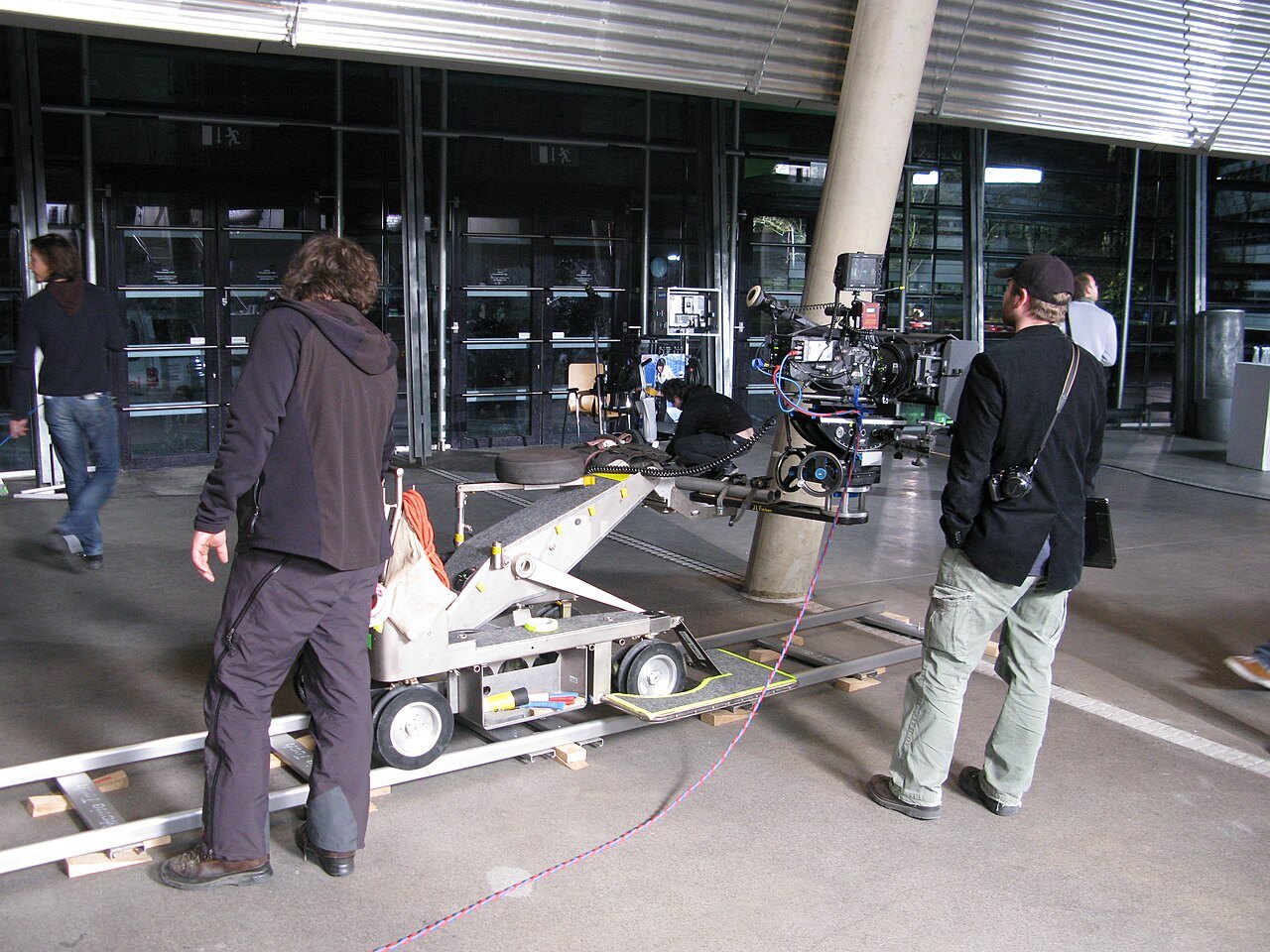

Camera movement often becomes noticeable only when it is fast or spectacular. A slow shift can also change the meaning of a scene. It may reveal a doorway, accompany a character or create distance. One simple question helps explain it: what can I see at the end of the shot that was unavailable at the beginning?
Not every change in size is camera travel
During a pan, the direction of view changes while the camera's position remains essentially fixed. A tracking or travelling movement carries the camera through space. A zoom changes framing through focal length and is therefore not a physical journey by the camera. These methods can be combined. The finished image also does not always reveal which equipment produced the movement.
Look at the relationship between foreground and background. During sideways travel, nearby objects change their position in the frame differently from distant ones. A zoom does not produce the same spatial shift. This observation is more useful than trying to identify a particular stabilisation system merely because the image appears smooth.
Following or revealing
A camera may follow someone walking while keeping them approximately the same size. The person remains the reference point as the surroundings change. If the camera moves away from a stationary person instead, it may reveal how isolated they are within a large room. Movement direction changes the relationship between person and setting.
Imagine someone sitting at a desk. A slow sideways move gradually reveals a second place setting that was previously hidden. The movement supplies information without a cut. Whether the setting suggests a visitor, a memory or an expectation depends on context. Technique alone does not determine meaning.
Take the timing seriously
Ask not only where the camera moves but when it starts. Does it follow an action, or begin beforehand and make you curious about its destination? Does it stop as soon as something becomes recognisable? A movement may seem exploratory, as though searching, or highly deliberate, as though already familiar with the room.
A stationary camera is not necessarily a weaker choice. Characters changing position can reorganise attention without any camera travel. If possible, compare two short passages: one with camera movement and another with movement inside a fixed frame. Describe how each guides your attention. Technical effort becomes relevant when you can identify what it visibly contributes.