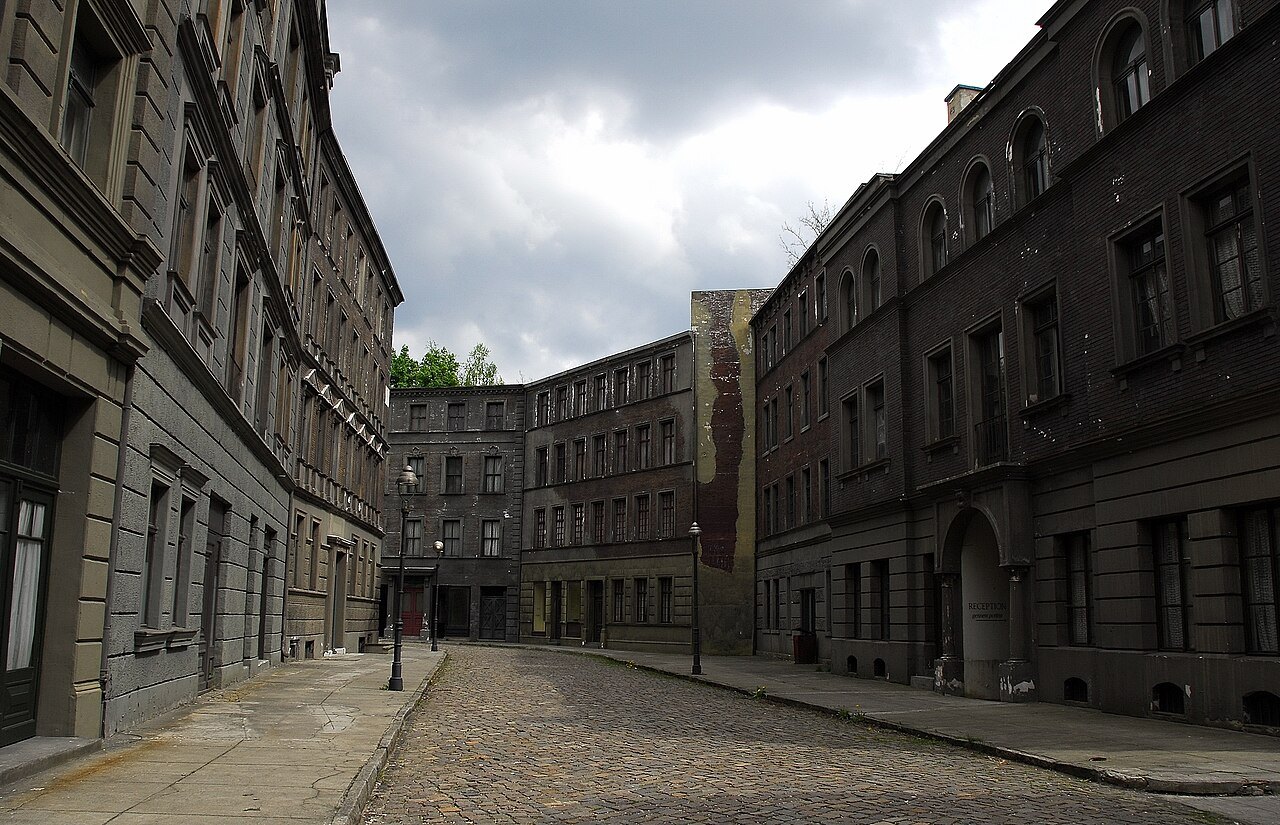

A film can be set in a particular city without having been shot entirely there. A real location can also be dressed, lit and edited to appear as another space. Asking whether something is real or built therefore does not always get very far. First consider the place the film presents and how it makes that place serve the action.
Ask three different questions about space
The setting is the place within the story. The location is the actual environment used for filming. The visible film world results from selection, dressing, camera, sound and possibly further processing. These levels may coincide, but need not. A street entrance and the room shown next can come from different filming situations.
ScreenSkills describes the locations department as finding and organising suitable physical places. Production design concerns the visual design of the production. The two can work closely together. An existing room is therefore not automatically untouched by design, and a constructed space is not necessarily easy to identify as a set.
Consider what the action needs
Watch an encounter in a corridor. Is there a visible escape route? Can somebody arrive unnoticed? Does a doorway let us see a reaction before the entering character notices it? Such questions describe the narrative work of the space without requiring a guess about how it was made.
A confined room may create intimacy or pressure, depending on its presentation. The same kitchen could feel welcoming through open routes and a shared field of view, or tense through concealed exits and separated figures. Floor area alone cannot explain the effect. Notice which parts remain visible and which are suggested only by sounds or glances.
Check claims about filming locations
If the actual place interests you, look for documented production information or statements from participating organisations. Similar architecture in a travel photograph does not confirm a match. A place named in the credits may also have another connection to the production. Label guesses as guesses, particularly when passing them on to other people.
A film conversation does not always need the production question resolved. You can describe precisely how a staircase prevents an overview or how a window separates characters without knowing whether the surroundings were built in a studio. Distinguishing observation from production knowledge avoids invented explanations and directs attention towards what the visible world actually achieves. The documented construction method can then add context, rather than standing in for looking at the scene.