
A film can make the same room sound very different. A low hum establishes an environment, footsteps give movement a physical presence, and music may introduce another layer. These elements need not all attract attention simultaneously. Their balance often matters most: what moves forward, what disappears beneath a voice, and what becomes audible as soon as someone stops speaking?
Three listening questions rather than a rigid list
First ask what you hear: speech, music, individual effects or continuous ambience. Then ask where it seems to originate within the scene. Finally, notice its relationship with the image. A radio song is music but also has a source inside the story world. An unseen source is therefore not automatically an external dramatic score.
Music can also change its relationship to the scene without stopping. It might begin as a small sound from a visible radio, then become a fuller accompaniment across several images after a cut. Notice the transition rather than assigning the piece one category for its entire duration. The change itself may be part of the storytelling.
Effects are designed
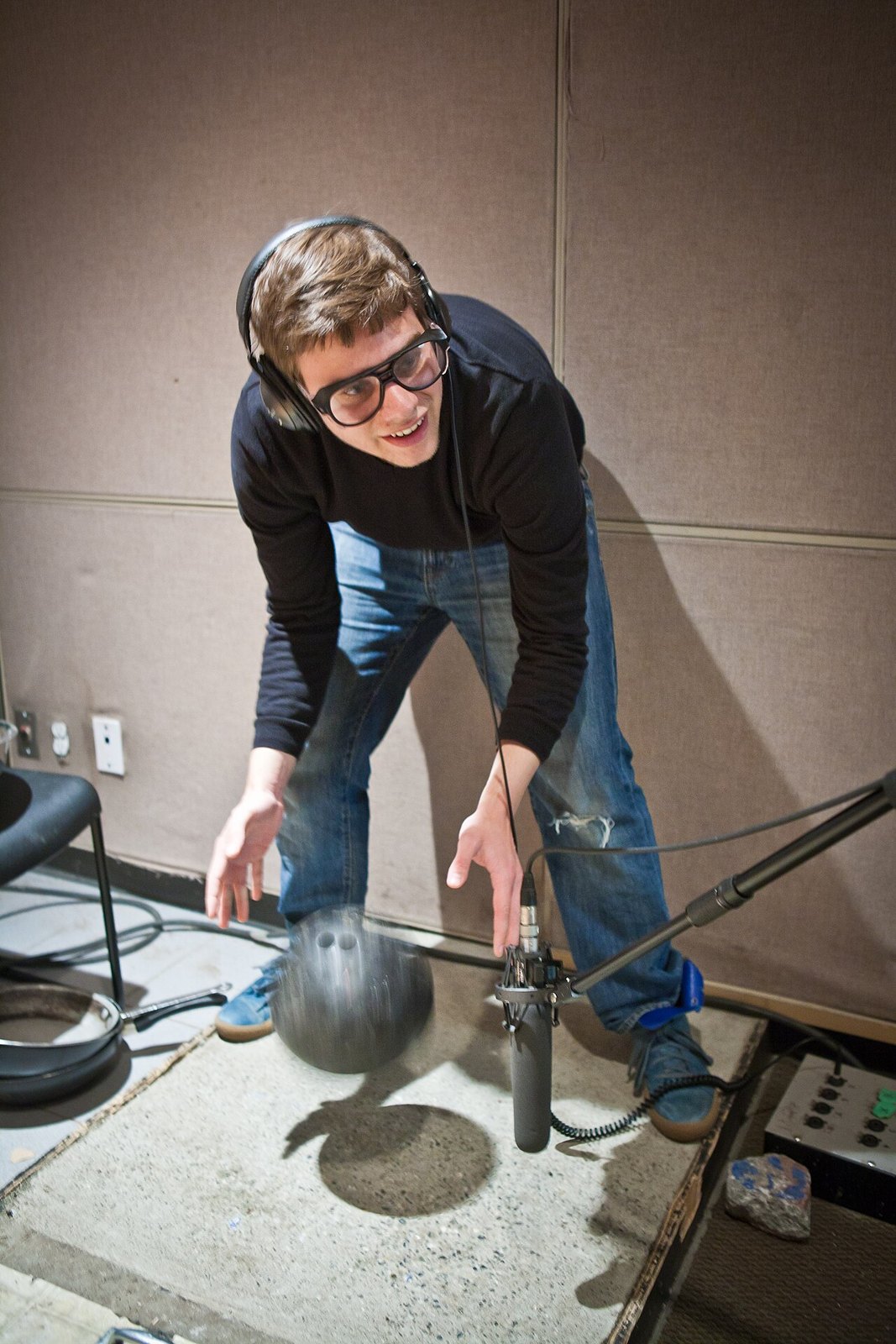
The Academy's educational material describes Foley as sound performed to match picture, including footsteps. Other sounds can come from recordings, libraries or further processing. The audible shoe therefore need not be solely the sound captured during filming. This does not reduce its effect; film sound is assembled for the scene.
Try observing a short walk across a room. Listen for footsteps, clothing and the surface underfoot. Are all movements equally clear? Is one small contact particularly emphasised? A key placed on a table may become important through sound despite occupying little of the image. Loudness is not a neutral measure of the object's physical size.
Describe silence more precisely
What feels like silence often involves reduction. Music stops while room ambience remains; voices cease but traffic continues. Distinguish complete absence of sound from a shift in attention. Ask which sound now becomes noticeable because another has disappeared.
Imagine two people arguing in a workshop. When a machine is switched off, a distant clock becomes audible. The clock need not have just started. Its emergence nevertheless changes the space and perhaps the feeling of the pause. You can describe that moment without automatically equating silence with peace or threat.
Imagine three sound treatments of a door
Take an unchanged image as a thought experiment: someone slowly opens a door. In one version, we hear only the quiet handle and steady room sound. In another, a mechanical rattle comes from beyond the door. In a third, a musical accent precedes the opening. The image remains identical, but expected danger grows from different information. The rattle belongs to the imagined situation; the musical accent can guide our response without a character hearing it.
A second comparison concerns distance. Is the rattle close and clear, or muffled behind a wall? This changes the source's apparent position. The effect need not have been recorded behind that actual wall. Saying it sounds screened off is therefore more precise than saying it was recorded through the door. These distinctions keep discussion vivid while separating an audible result from an unverified account of its manufacture.
Listen again to one passage
For a second examination, choose a manageable section and keep playback at a comfortable level. Follow the image once, then pay particular attention to the audible layers. You can briefly look away from the screen, while remembering that the film is designed around image and sound together. An isolated track cannot answer every question about the combined effect.
Record a sequence: music recedes, a door closes, breathing comes forward. Then consider what information gains importance through those changes. Avoid claiming that everyone must experience a particular mood. Precisely identified changes allow a conversation about differing responses.