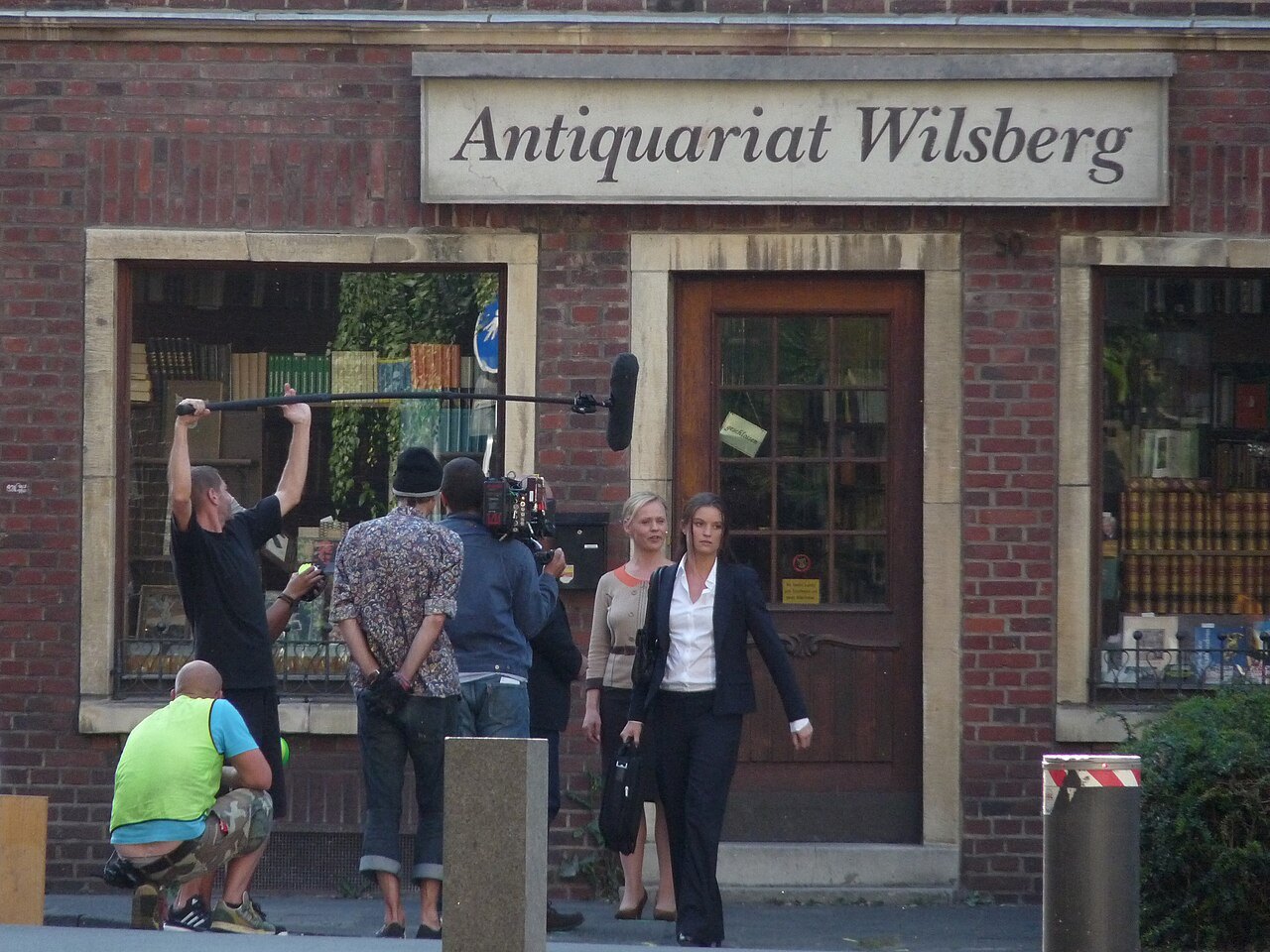

The edge of the frame does not automatically mark the end of the story's space. A character may look at someone we cannot yet see. A sound may come from a corridor while the camera remains in a room. Such clues invite us to supply a surrounding world. What lies outside is often actively shaped rather than simply omitted: we wait, infer and connect visible reactions with unseen causes.
A look need not receive an immediate reverse shot
When someone looks out of frame to the right, an expectation develops. The film can show the object of the look next or continue withholding it. Notice how long the question remains open. A facial response may provide information without proving exactly what has been seen.
Imagine someone opening a letter and looking towards a door. Without another image, we do not know whether someone stands there, a sound occurred or the character is merely thinking. A premature explanation replaces uncertainty with our own story. On another viewing, check which clues were genuinely present.
Sounds suggest distances
A nearby impact and a distant voice suggest different spaces. Volume, reverberation and tone work together. They offer a spatial impression, not a reliable measurement in metres. Film sound can deliberately alter apparent distance to emphasise something or leave it uncertain.
Ask whether a character reacts to the sound you hear. A response may anchor its source within the depicted situation. Without one, several explanations remain possible: the person is not listening, the sound is ordinary to them, or it belongs to another narrative level. The absence of a glance does not decide the matter by itself.
A later view changes an earlier moment
When the camera eventually shows the corridor, it may confirm or correct an assumption. The interesting question is what information had previously been missing. A seemingly threatening shadow may prove harmless, or the relevant action may lie elsewhere. The later image makes the earlier framing readable in retrospect.
For a brief analysis, choose a scene whose important source initially remains unseen. Write three short statements: what was visible, what was only heard or inferred, and what was subsequently confirmed. This separates observation from interpretation. It also shows that a restricted frame does not necessarily create a small story world. What remains unseen can give a place breadth and a situation suspense.