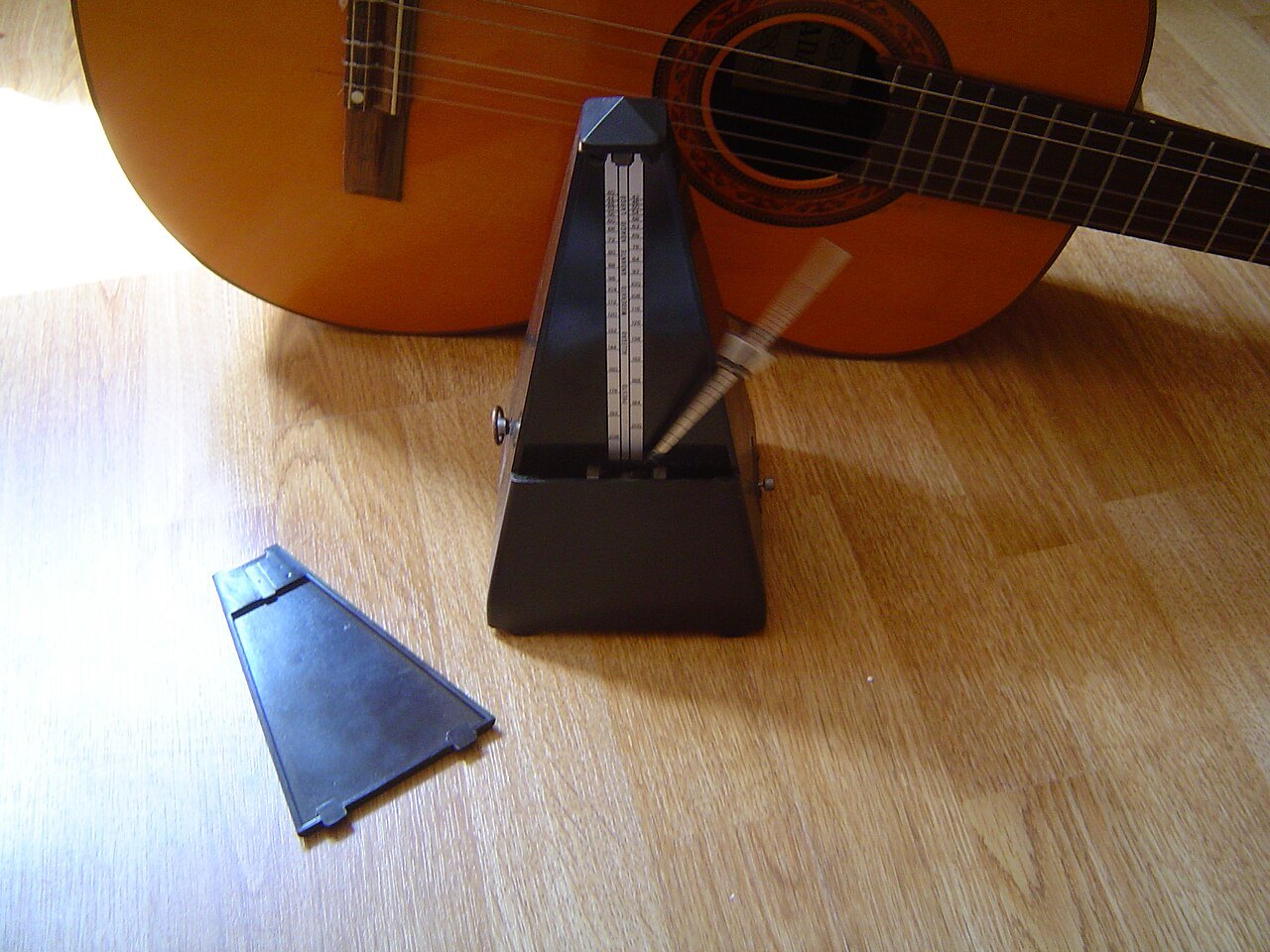

When moving along with music, you often follow a regular pulse. The sung melody can simultaneously form a different pattern: short syllables, sustained notes and gaps. Those shapes belong to rhythm. Pulse and rhythm are connected but not interchangeable. The distinction becomes easier when you follow one layer first and add the other afterwards.
Find a steady reference
Choose a piece with clearly recurring beats. Tap quietly and evenly without copying every sung syllable. When the voice pauses, try to keep tapping. This shows that you are following a reference that is not tied to each individual sound. Different music offers different degrees of clarity for this exercise.
Ableton's introduction explicitly distinguishes beat as a pulse from the everyday use of the word for a drum pattern. A tempo in BPM also refers to counted beats per minute, not the number of individual notes occurring during that period. A dense pattern can feel faster than a sparse one while the pulse remains unchanged.
Place a sentence over the pulse
Try speaking a short sentence of your own over four evenly spaced beats. First stretch one word across two beats, then fit several short syllables into the same interval. The pulse stays steady while the spoken rhythm changes. This experiment needs neither notation nor an exact tempo measurement.
Transfer that attention to a recording. Listen for a melody beginning between recurring reference points or sustaining across one. If your tapping becomes uneven, you may have unintentionally switched to following the melody. Return to an easier accompaniment part and add the tune again later.
Avoid forcing one counting scheme
Sometimes the same passage can be tapped at a slower rate or twice as quickly. That does not automatically make one perception wrong. For a comparison, what matters is keeping the reference consistent. Do not accelerate merely because more short sounds enter.
Freer introductions, obvious tempo changes or very sparse passages can make the pulse uncertain. It may then help to listen without counting first. The exercise should open attention rather than force all music into an even grid. A useful observation might be that the voice becomes busier while the accompaniment maintains its regular reference. This describes more than the general impression that the piece is getting faster, and it gives another listener something specific to check.