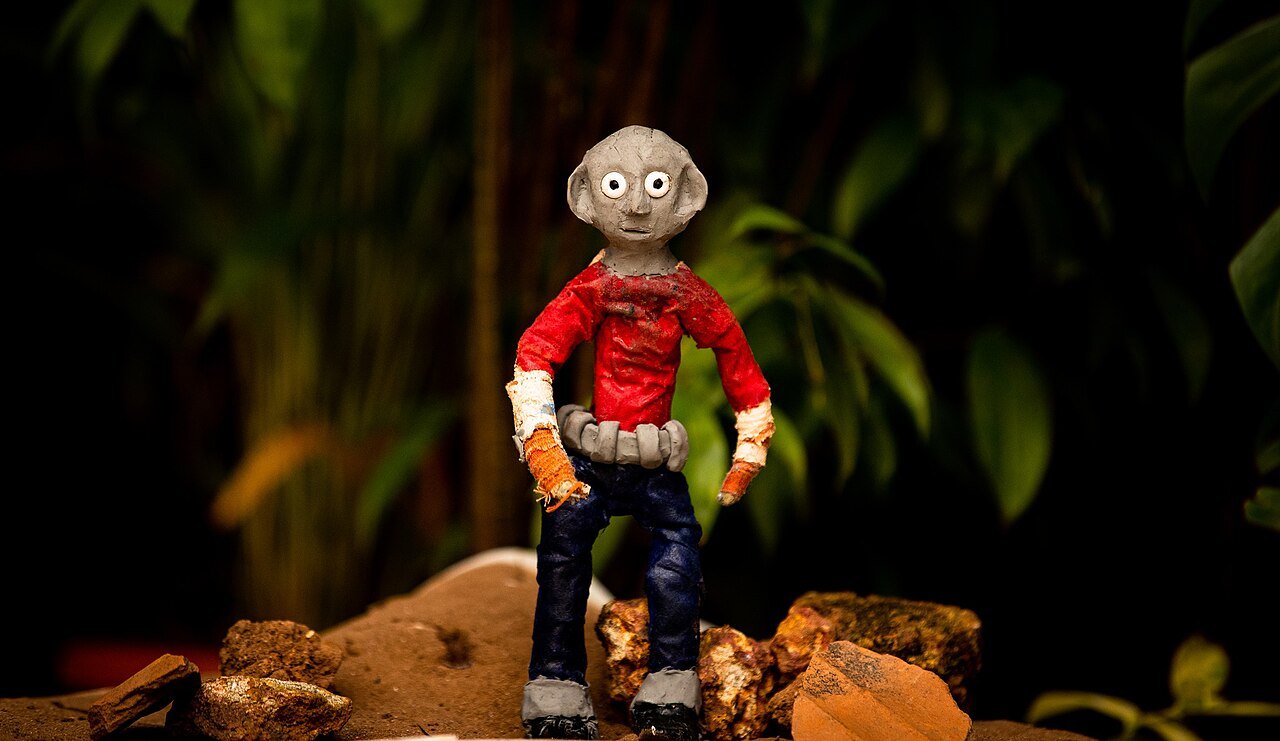

A stop-motion figure moves in the finished film although its position was changed between individual photographs. The method can use puppets, clay, everyday objects or other materials. Its appeal often comes from a particular combination: surfaces feel tangible while movement follows deliberately shaped time. It need not be perfectly smooth or intentionally jerky to function as stop-motion.
Spacing creates a sense of weight
An object moving the same distance between every image behaves differently from one with changing intervals. A slow beginning, quick middle and delayed finish make the same journey feel different. The NFB's material on animation and stop-motion provides context for this deliberate arrangement of movement phases.
Watch a brief action in which someone reaches for an object. Does the hand hesitate before grasping it? Does the whole body participate or only an arm? Such distinctions communicate intention and weight. Convincing expression depends not simply on the number of small adjustments but on the positions selected.
Surfaces contribute to the effect
Fabric may show tiny folds, clay a worked shape and wood its grain. Light falls on those materials and reveals their volume. Viewers may consequently experience a small constructed world. That perception is not proof that every visible area was created without digital processing.
In a close view, ask whether the surface attracts attention or recedes behind the action. A deliberately rough object may suit one story, a finely finished model another. Handcrafted work does not automatically become more valuable because its traces are more conspicuous. Their function within the particular film remains the relevant question.
Try one focused observation
Choose a passage in which a character sits down or lifts something. Watch normally first and describe the impression afterwards: heavy, cautious, hurried or floating. On the second viewing, look for visible reasons. Perhaps the figure holds one position briefly, or the upper body moves before the legs.
Do not attempt to count every individual photograph. Sound, editing and direction of attention also matter. An effect can make a light contact seem heavy, while rapid cutting can conceal movement details. If you later watch production footage, compare it with your observations. Which assumption about the process was correct, and which came only from the finished impression? That distinction makes the method especially revealing.