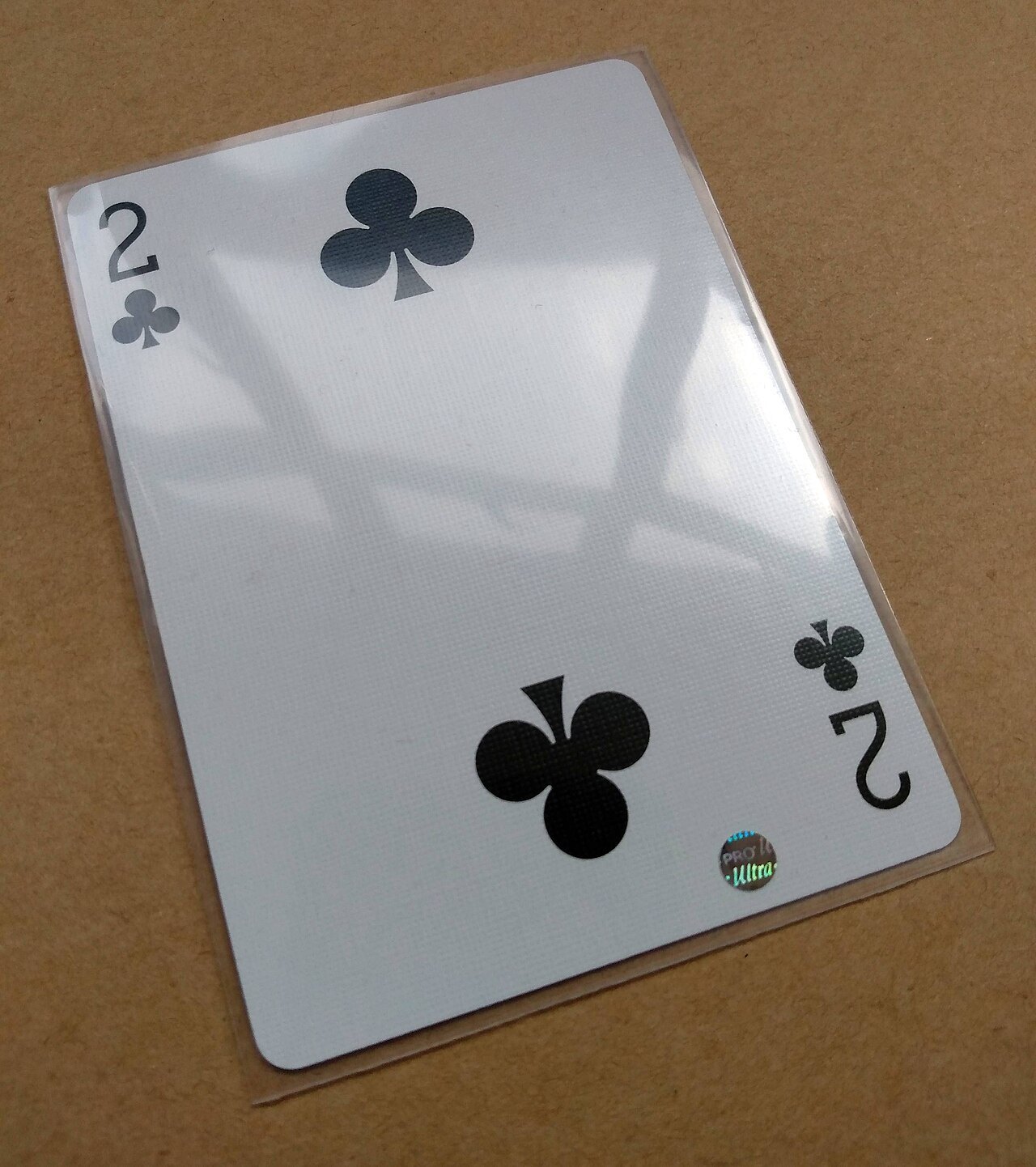

Card sleeves can protect frequently handled cards from some mechanical wear. They also change stack height, shuffling feel and sometimes readability under light. The decision should therefore begin with the cards and how they are used, rather than with the thickest available sleeve. A small deck shuffled occasionally has different needs from one redistributed on every turn.
Distinguish card size from sleeve size
Measure a card’s width and height in millimetres. Manufacturers may publish both the sleeve’s outside dimensions and the card dimensions it accommodates; those are different measurements. A sleeve needs some clearance but should not allow excessive movement. A manufacturer’s sizing guide is therefore more informative than the word “standard” alone.
Check the edition you actually own. Card dimensions can vary between editions or language versions. A list for a game with the same title is a starting point, not a measurement of your cards. Where possible, test a few sleeves before enclosing the entire collection.
Treat concealed cards consistently
Cards shuffled together in one hidden deck should not be identifiable through different sleeves. Colour, backing, wear and size can reveal information. Replacing a badly worn sleeve may therefore be worthwhile even if it still protects the card physically. The issue is also whether its identity becomes apparent before it is drawn.
Both sides of a double-sided card may need to remain visible. An opaque sleeve would then be unsuitable unless the rules provide another solution. Transparent sleeves also do not conceal markings already present on card backs. Protection and concealment are separate functions that should not be confused.
Test the surface under real lighting
Smooth and matte finishes feel different and reflect light differently. Readability also depends on lighting, printing and viewing angle. Examine small text at the place where you normally play. A broad product label cannot replace checking how that particular surface interacts with your table and lights.
Try shuffling a small sleeved stack. New sleeves may be slippery, while thick stacks can be difficult to hold. Avoid forcing a technique that bends cards or sleeve seams. The objective is usable handling, not simply a uniformly presented collection that becomes awkward whenever somebody needs to draw or shuffle.
Check the full space requirement
Sleeve a representative portion and compare its height. A compartment or deck box that previously fitted may become too tight. Card holders and draw trays also need sufficient width and height. The game box lid should close without pressing down on the components.
A sleeve is not a waterproof container, so keep drinks away from the card area. If the extra bulk and effort provide little benefit, careful handling and suitable storage may be enough for that use. Decide game by game rather than treating every piece of card as requiring the same protection.