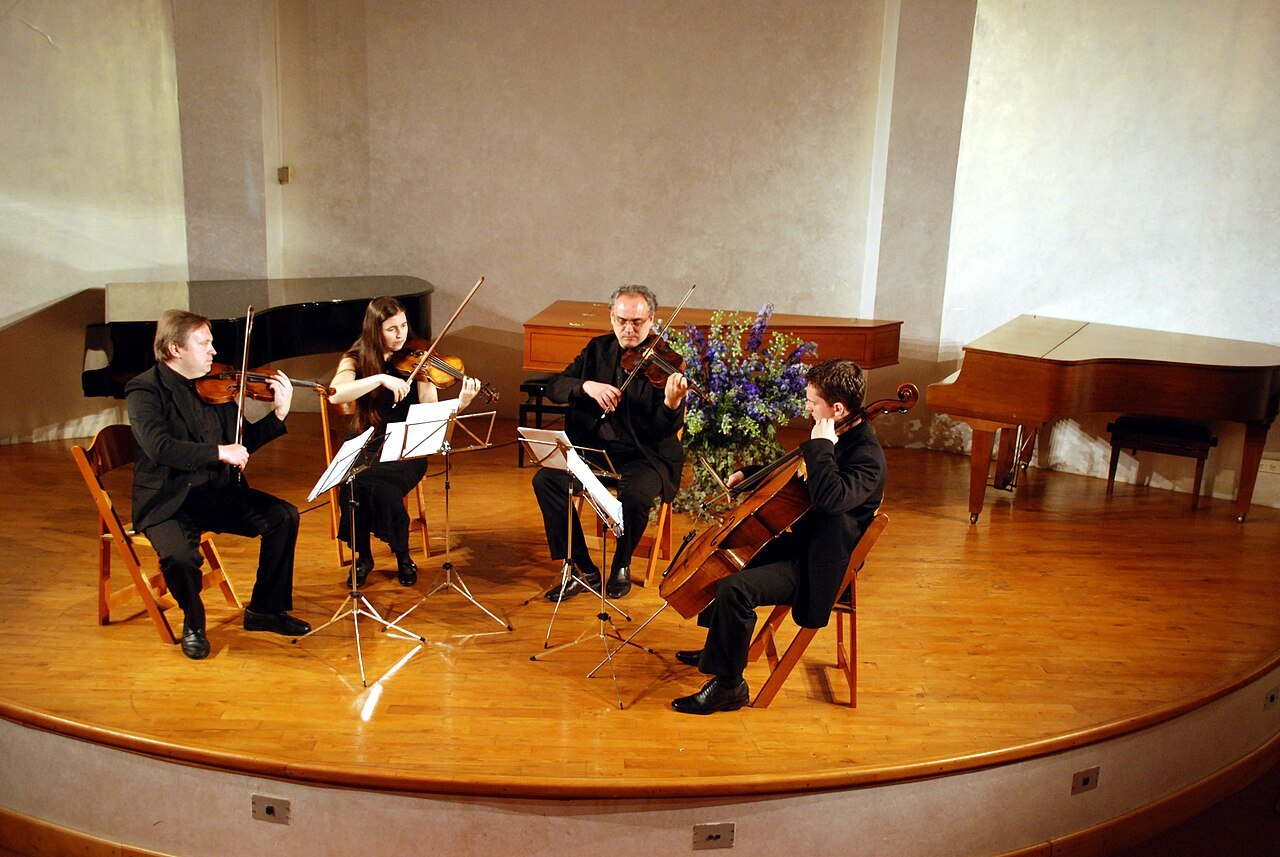

Chamber music can be heard as conversation without inventing a character for every part. The interest lies in how ideas pass between performers: one begins, another responds, several combine or leave space. An apparently accompanying figure may shape the progression decisively. A small ensemble can make these relationships accessible without guaranteeing a simple structure.
Follow one part along its route
Begin with a short passage and find an identifiable line. Continue following it when it becomes quieter or less prominent. Does another instrument take over its idea? Does it remain as a repeated background figure? A part can change function without changing instrument.
Wigmore Hall's chamber-music material describes individual parts in relation to one another. For listening, the useful point is that there need not always be one fixed lead above an unchanged accompaniment. Following only the highest or loudest line can make the handovers between them disappear.
Hear agreement and difference together
Find a moment when several instruments enter simultaneously. Do they share a recognisable rhythm or move differently? A common beginning can create unity before the lines diverge. Conversely, initially separate figures may meet at a particular point.
Try hearing the same passage twice, first attending to an upper part and then a lower one. Rather than deciding which sounds nicer, note how the second focus changes the whole. The lower part may prepare a transition earlier than you noticed on the first hearing.
Do not take the conversation literally
Musical replies need not represent actual questions. A similar figure can return without naming a particular emotion. Describe the relationship first: shorter, later, denser or in another register. Then explain why it suggests agreement, interruption or disagreement to you.
In a video, glances and breathing can draw attention to coordination. They do not establish what a performer was thinking. Listen again without watching so that visible gestures do not dictate every interpretation. A precise impression brings together audible handovers, shared entrances and changing functions. It requires neither complete knowledge of the score nor a story about the performers' personalities. If you can identify one place where your attention passes from one part to another, you already have a specific relationship worth discussing and revisiting.