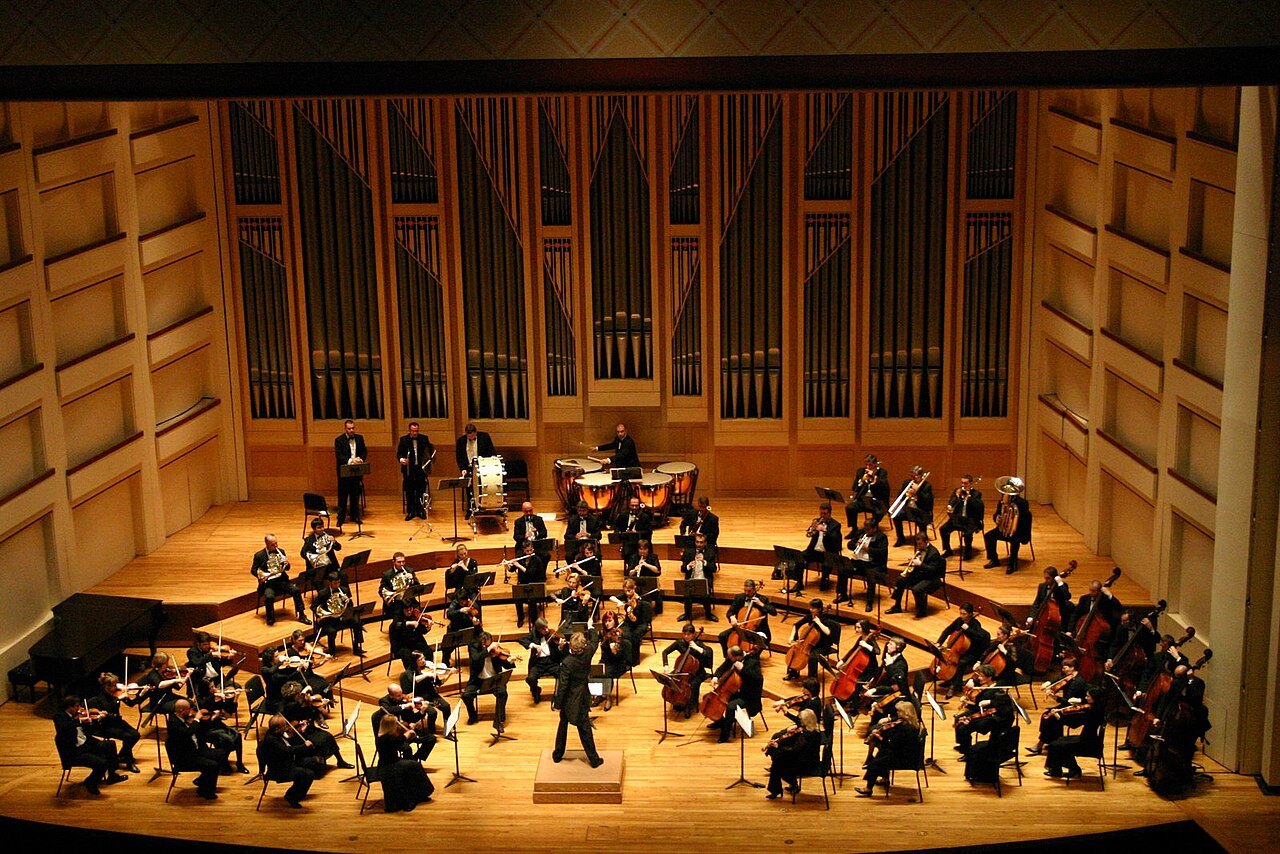

A long classical work does not have to remain completely in memory after a first hearing. One passage you want to revisit may be enough. From there, you can discover neighbouring sections, returns and contrasts. Listening in portions is a learning aid, not a claim that continuity does not matter. The aim is to gain familiar reference points and later place them within the larger progression.
Distinguish the work from the recording
First check the complete title and performers. Different recordings can present the same work differently. Keeping one recording for the first few listens helps: otherwise a change of interpretation may be confused with a passage you simply failed to recognise before.
Check whether the work has several movements. A track may correspond to a movement, but does not necessarily represent every musical division. Compilations sometimes place individual movements from different works together. Make sure your playback list contains the intended work rather than similarly labelled extracts.
Choose a manageable starting point
Begin with a movement or clearly bounded section that suits the attention available. Listen once without notes. Remember only one distinctive moment: a clear entrance, a change of instrumental group or a pause. Historical context and formal analysis are not immediate requirements.
On the next pass, find the moment and hear a little before and after it. Is a new idea prepared? Does something familiar return in altered form? Carnegie Hall's guided listening activities likewise direct attention towards particular musical qualities within excerpts. For your own listening, the key is keeping the focus limited rather than trying to follow every layer at once.
Describe a short progression
Record three audible landmarks in your own words: quiet opening, dense shared entrance, isolated replies. This need not explain the entire form. It creates a memory aid to compare with the next hearing. If a landmark no longer fits, revise the description instead of forcing the recording into your initial sketch.
Words such as fast, slow, loud and quiet should refer to a specific change. A rapid run can appear above a steady underlying movement; a fuller sound need not be louder at every moment. Describe which part enters or which interval between entrances becomes shorter. Precision then develops from listening itself.
Add a neighbouring section
Once a passage becomes familiar, include what precedes or follows it. Attend to the join. Does the ending feel settled, or does it suggest something still to come? Does the new opening retrospectively change the effect of the close? These questions connect separate islands of memory into a progression.
Later, try a complete hearing with few interruptions. You do not need to recall every earlier observation consciously. Recognising familiar places and sensing their relationship may be sufficient. If attention fades, another evening is possible. Familiarity grows through repeated encounters rather than dutifully enduring a particular duration.
Compare another interpretation afterwards
Choose the same short passage in a second recording. Notice tempo, articulation, the balance of parts and pauses. A difference is not automatically an improvement or deterioration. First ask what becomes more or less apparent. The familiar passage provides a manageable basis for comparison where the work's title alone would be too broad. Return to a wider section if the short extract seems to favour one approach simply because its surrounding context is missing.