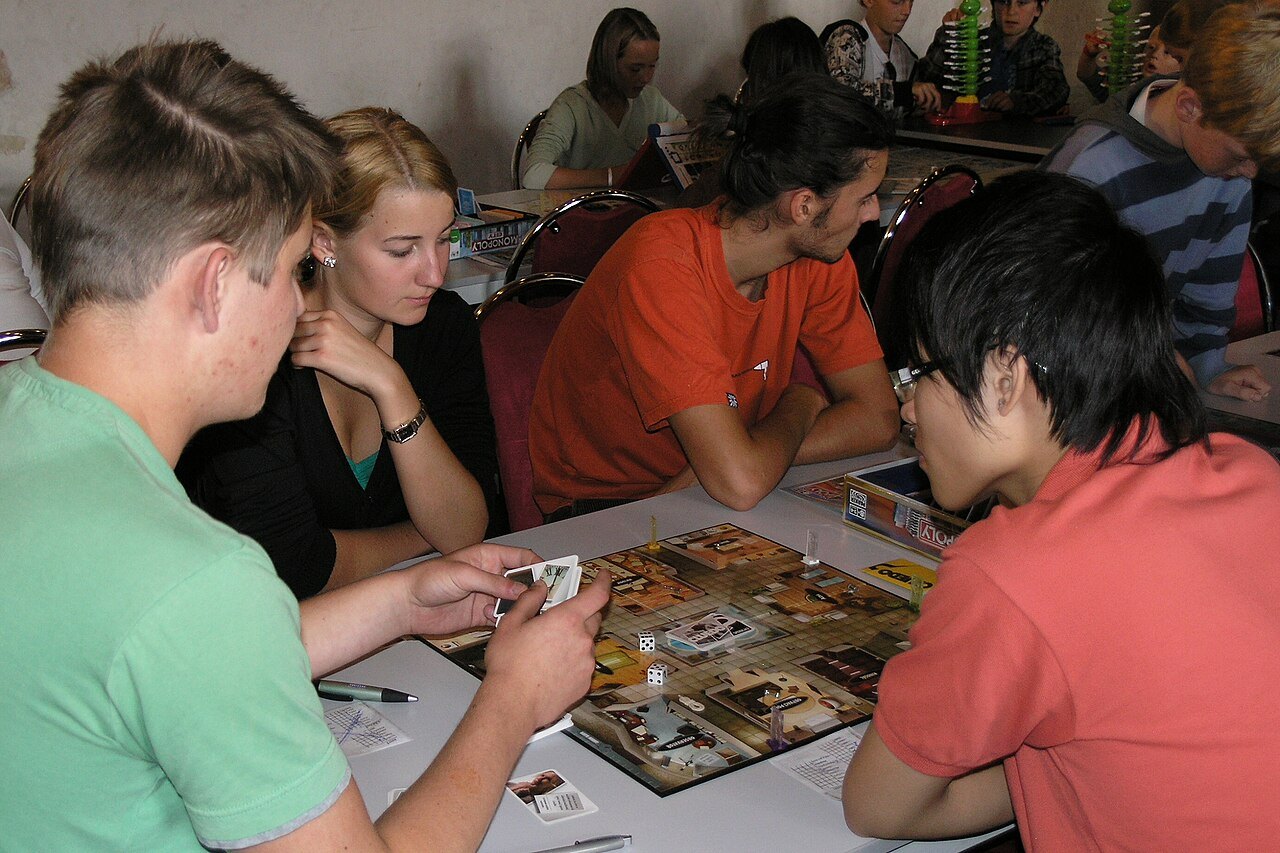

A deduction game asks you to identify a hidden solution from incomplete information. The target might be a location, a person, a sequence of numbers or a combination of properties. A plausible suspicion is different from a necessary conclusion. To see that distinction, ask of every clue which possibilities remain if the information is true.
Separate observation, rule and assumption
A card shown openly can be a confirmed observation. A statement that particular cards appear only once belongs to the rules. Believing that somebody would certainly keep an important card is an assumption about behaviour. Avoid recording these three kinds of information as though they had equal certainty.
In a simple example, the possible rooms are a kitchen, a library and a garden. A reliable clue excludes the garden. That does not prove the kitchen is correct because the library remains possible too. Another clue is required to narrow the choice. This small precaution prevents an early suspicion from quietly becoming an established fact.
Use a readable notation
Where notes are permitted, choose a few unambiguous marks. A cross might mean excluded, a circle confirmed and a question mark unknown. For indirect clues, record where the information came from. Otherwise, tracing a mistake after several rounds becomes difficult because the supporting evidence has disappeared from memory.
Record compound statements accurately. “At least one of these three cards” does not mean all three are present. Conversely, a statement about exactly one card can be stronger than a general selection. Words such as at least, at most and exactly carry important information rather than merely making a sentence sound precise.
A clear table is useful only when it reflects information players are allowed to record. It must not bypass a ban on notes or expose somebody else’s private information. Before starting, check whether writing is permitted and which aids the game provides. The same note-taking habit may be appropriate in one deduction game and inappropriate in another.
Choose questions for the information they provide
The most useful question does not always confirm your favourite suspicion. A question may be more valuable when its possible answers distinguish several remaining paths. Before asking, consider what you would know differently after each possible response. This reveals whether the question actually changes your position.
If both answers would lead to the same next step, the question may offer little information. There can still be tactical reasons to ask it, such as influencing what becomes public. Keep those aims separate from the process of acquiring knowledge so you understand what the question is intended to achieve.
Revisit mistaken assumptions
When a contradiction appears, examine the oldest uncertain assumption first. The mistake may lie in an earlier statement that was interpreted too strongly rather than in the newest clue. Trace the evidence backwards before inventing another exception to explain an increasingly complicated theory.
After the solution is revealed, review one decisive clue together. When could it have narrowed the answer, and which other information was needed? This turns the review into an explanation of reasoning. It need not become a competition over who claims to have known the solution long before everybody else.