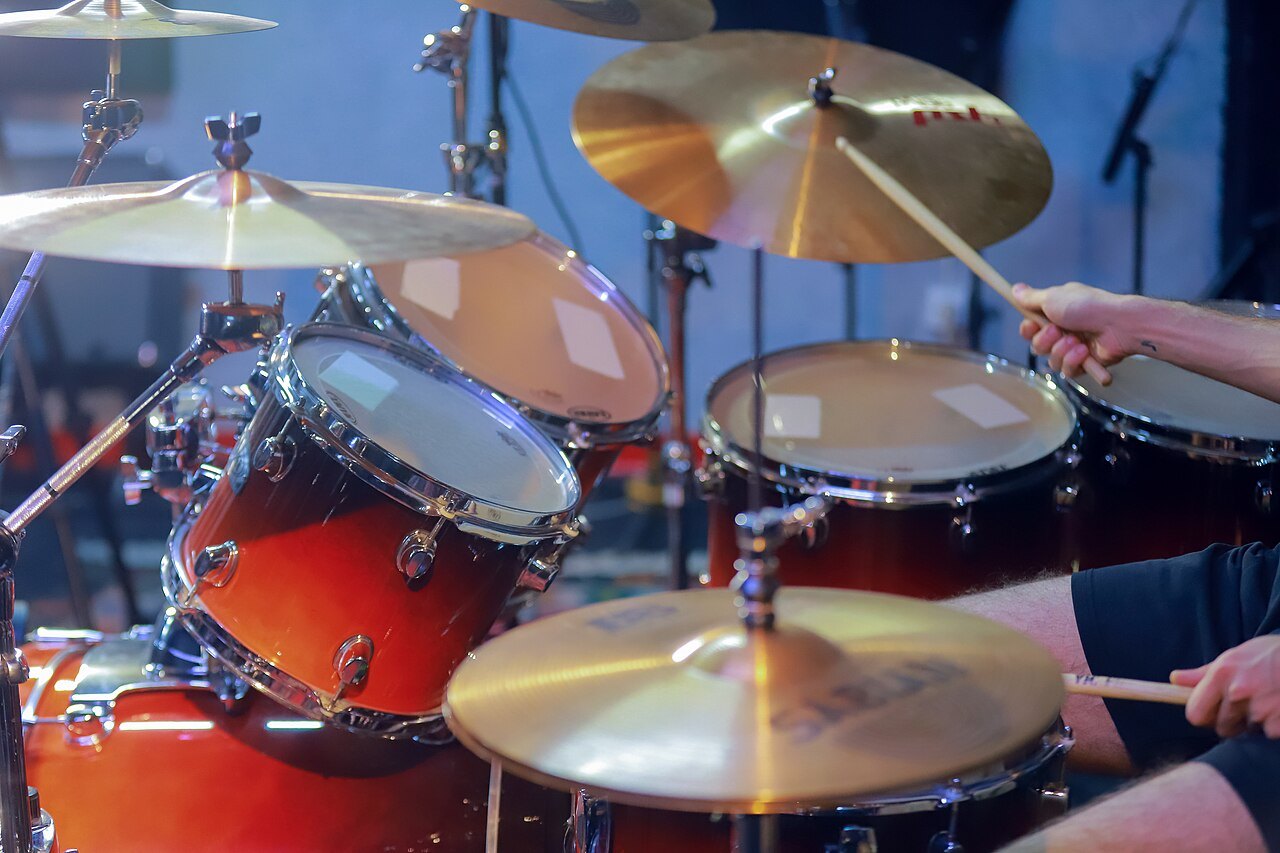

A groove does not result from playing as many hits as possible. The relationship between recurring events and small deviations often matters more. To understand a drum pattern, you need not identify every drum immediately. Begin with a simpler question: what returns regularly enough for me to expect the next entrance, and what alters that expectation?
Follow one part for a complete cycle
First find the low impacts and notice where they return. On another pass, concentrate on a brighter, shorter sound. Only then try hearing them together. A general rattle becomes a relationship between parts. If the recording is crowded, choose a passage with fewer other instruments.
A common pattern in music counted in four places a snare or clap on the second and fourth beats. Ableton calls this a backbeat. It is a recognisable example, not a universal rule for drumming. Check whether it actually appears in your recording rather than forcing a count against the sound.
Accents are more than extra hits
Listen for certain entrances standing out while the sequence remains unchanged. Accents can make a repeated bright figure form a larger group. The difference may lie in the weight given to existing positions rather than new positions being added. A missing hit can also become conspicuous once an expectation has been established.
Tap a simple even pattern and emphasise different places in turn. This small experiment shows how perception changes without altering the basic tempo. Do not use it to explain every recording; use it to direct attention towards emphasis when you listen again.
Hear a transition together with its return
Before a new section, a fill may depart from the recurring pattern. Attend not only to the conspicuous extra notes but also to the point where regular movement resumes. A gap before the return can matter as much as a fast sequence of hits.
Avoid inferring the production method immediately from a lively impression. A recording may be played, programmed, edited or assembled through several methods. The word groove cannot establish which. Describe the audible property instead: an accent repeatedly falls slightly apart from another part, a pattern remains stable or its final group changes. This keeps the account close to the music and makes it possible to compare impressions with another listener without claiming to know how the track was made.