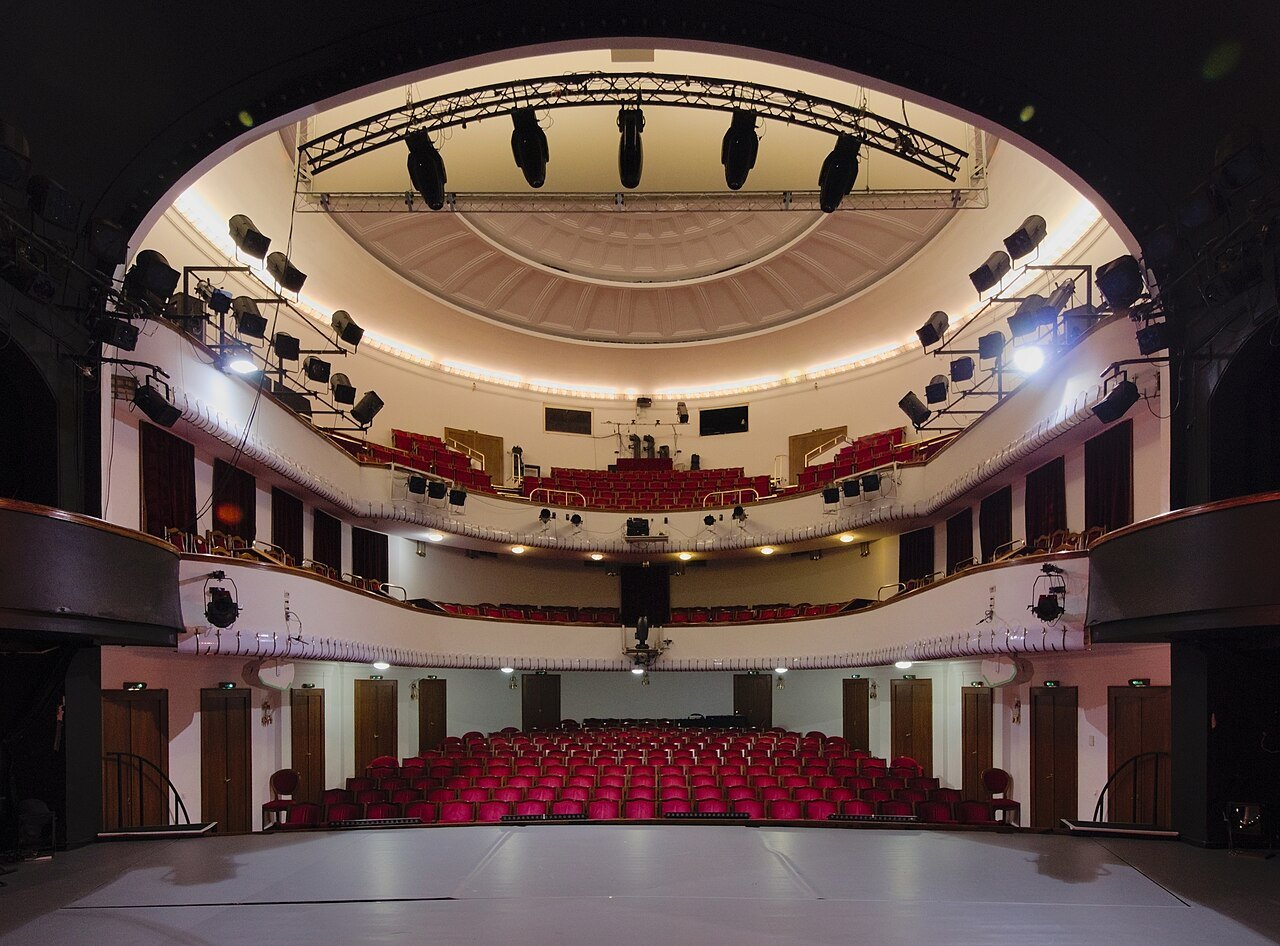

A first theatre visit does not require memorising the play or mastering theatrical terminology. A few concrete details are more useful: which performance have you booked, where is your seat and when does the performance start? Establishing these basics leaves you free to engage with what happens on stage.
Read the booking carefully
Check the date, venue and language. A theatre may operate several stages, so its familiar main entrance is not necessarily the correct one. Distinguish the performance time from the doors-opening time. Information about duration, an interval, age guidance and particular staging elements often appears on the individual production page.
If surtitles, particular seating conditions or step-free routes matter, ask before booking. A general symbol does not answer every question. Explain, for example, whether you need to see a surtitles display from your seat or require a route without stairs.
Prepare as much as you find useful
A short synopsis can provide orientation, but you do not need to read an extensive interpretation before forming your own impression. To preserve surprises, limit preparation to the starting situation, language and practical arrangements.
Choose clothing that feels comfortable and complies with any expressly stated venue rules. There is no basis for claiming that all theatres require formal dress. Consider instead what will remain comfortable during the performance and whether a coat or larger bag should be checked.
Settle into the venue
Allow time for ticket checks, orientation and reaching your seat. Ask staff if a door or seat number is unclear. Late admission may be restricted, with arrangements varying by venue and production.
Before the performance, silence and put away your phone as required by the venue. Check photography and recording restrictions too. You do not have to understand every reference during the show. Observe voices, movement and the stage space. Afterwards, one scene that stayed in your memory is enough to start a conversation.
A small decision aid
When choosing between two first visits, compare more than the title. Put subject, language, running time and a workable return journey side by side. A less familiar play may interest you more while also fitting the evening better. A suitable first experience need not involve either the most famous work or the most expensive seat.