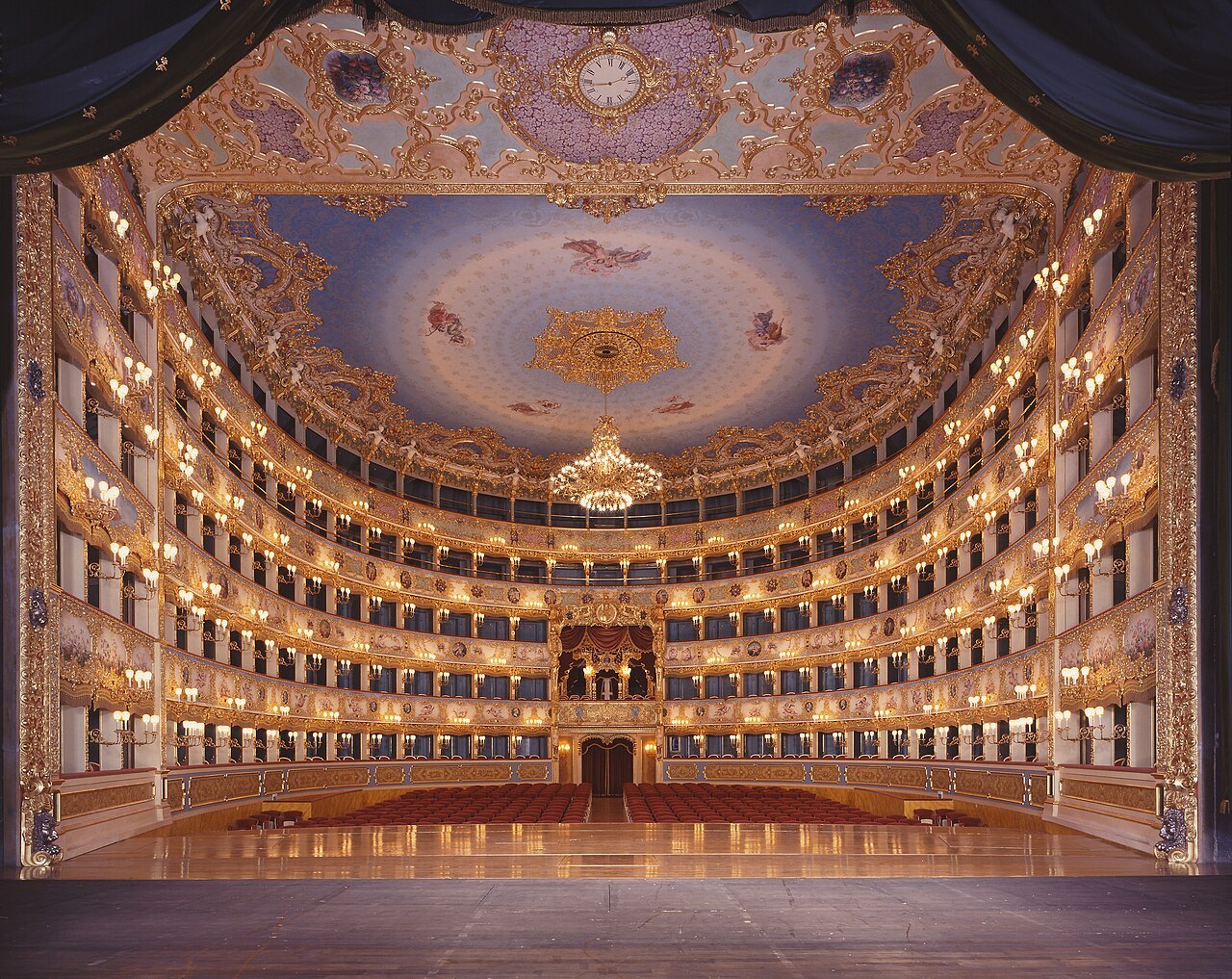

You do not have to understand every sung sentence immediately to follow an opera performance. A manageable amount of preparation can nevertheless help connect the voices with the scene. Start with information about the particular production rather than assuming there is only one correct way to experience opera.
Know the starting situation
Read a brief synopsis and establish the main relationships. Who wants something from whom, and what conflict exists at the start? A small character outline is often more useful than a lengthy historical essay. You need not read the ending beforehand if you prefer to discover the development during the performance.
Check the performance language and availability of surtitles. Their language may differ from the sung language. If necessary, ask about visibility from your intended seat; side or elevated positions can offer different viewing conditions.
Alternate reading and watching
Surtitles are an aid rather than an instruction to look upwards continuously. Once you have understood the sense of a passage, return your attention to the stage. Facial expression, the distance between characters and movement also tell the story.
During a longer musical passage, it can help to focus on one voice. How does its expression change in relation to the scene? You do not need to identify a voice classification to notice this. When several people sing together, your first impression may come from sound and tension before individual words become clear.
Organise the longer evening
Check the announced running time and intervals for that particular performance. Leave flexibility in the journey home; an approximate finishing time is not a minute-by-minute transport schedule. Late arrivals are subject to the venue’s rules, which may prevent immediate admission.
For a first visit, choose a production whose subject interests you. Fame alone is not a sufficient selection criterion. Afterwards, you could listen to a scene again in a recording and consider what feels different without the stage design. Remember that another recording also presents another interpretation.
Avoid overloading your attention
Trying to follow the character list, surtitles and orchestra simultaneously can obscure the present stage moment. Give your attention one focus for a few minutes. Understand the action, then follow a voice, then return to the overall picture. Alternating in this way is not a failure; it is a way of navigating a layered performance.