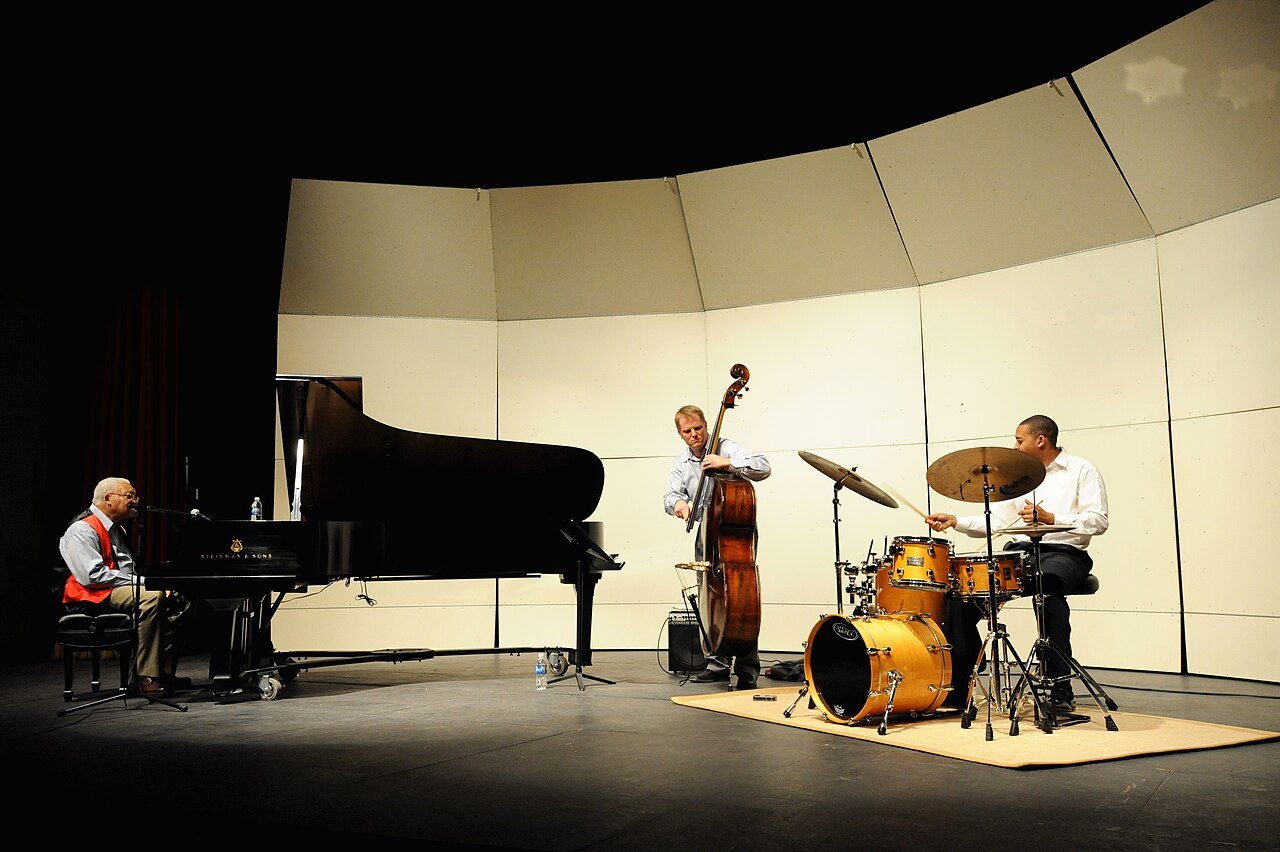

On a first listen, a jazz solo can seem like a long stream of new notes. Orientation becomes easier when you also seek recurrence: does an accompaniment remain recognisable, does a harmonic movement return, or does a player revisit a short idea? You do not need to explain every note. The relationship between novelty and familiarity already provides a way in.
Keep a theme as a reference
Start with a recording that clearly presents a melody. Retain a short part, perhaps its opening or a distinctive rhythmic figure. When other lines appear later, ask more than whether they reproduce the same tune. Listen for relationships in rhythm, direction or pauses.
Many jazz recordings use recurring forms, but they do not all follow one sequence. Jazz in America's glossary includes blues structures and several song forms. A progression from theme to solos and back to the theme can be a useful starting point, not a compulsory template. If the anticipated return does not arrive, the music may be organised differently.
A solo remains part of an ensemble
On another listen, attend deliberately to the accompaniment during a solo. Does the drumming change after a short phrase? Does the harmonic support become denser or leave room? Other parts can respond without becoming the main focus. A solo therefore does not necessarily mean that only one person is making musical decisions.
Choose a passage lasting a few phrases. Note where the leading voice pauses and what appears in those gaps. A pattern may continue unchanged, or another part may answer. Either is a concrete observation. Do not infer from a fitting response alone that it must have been spontaneous; establishing that would require information about the recording.
Follow one idea through several responses
Imagine a short figure of two quick notes and one longer note. A solo might repeat it, then begin it after a pause, then move it to another register. Even with changed pitches, the rhythmic outline can remain recognisable. Searching only for the original tune may miss this other source of continuity.
Listen to the accompaniment too. If it stays restrained during the repetition and answers more clearly during the extended note, a relationship develops between leaving space and stepping forward. Whether this was planned or spontaneous remains open without further information. The musical observation is still complete: an idea develops here and receives an audible response there.
A longer solo may contain several such small arcs. Choose one initially rather than trying to explain everything through specialist vocabulary. If useful, sketch short, short, long and mark the pause. On another hearing, check whether the pattern actually returns or whether memory has made different passages too similar. The sketch supports verification rather than replacing notation for the entire solo. It also makes comparison with another listener possible without requiring either person to name every note.
Follow development rather than speed
Notice whether a short idea is repeated, extended or moved into another register. Such changes can connect a solo even if you cannot name its harmonies. Rapid runs are only one option. Gaps and economical repetition can also establish a progression.
If you lose your bearings, find a clear new entrance or a return of the theme. You do not need to reconstruct every second retrospectively. Afterwards, record one moment when several parts seemed audibly related. That begins an account of interplay extending beyond which performer delivered the most conspicuous solo, and offers a manageable passage to revisit with attention on a different instrument.