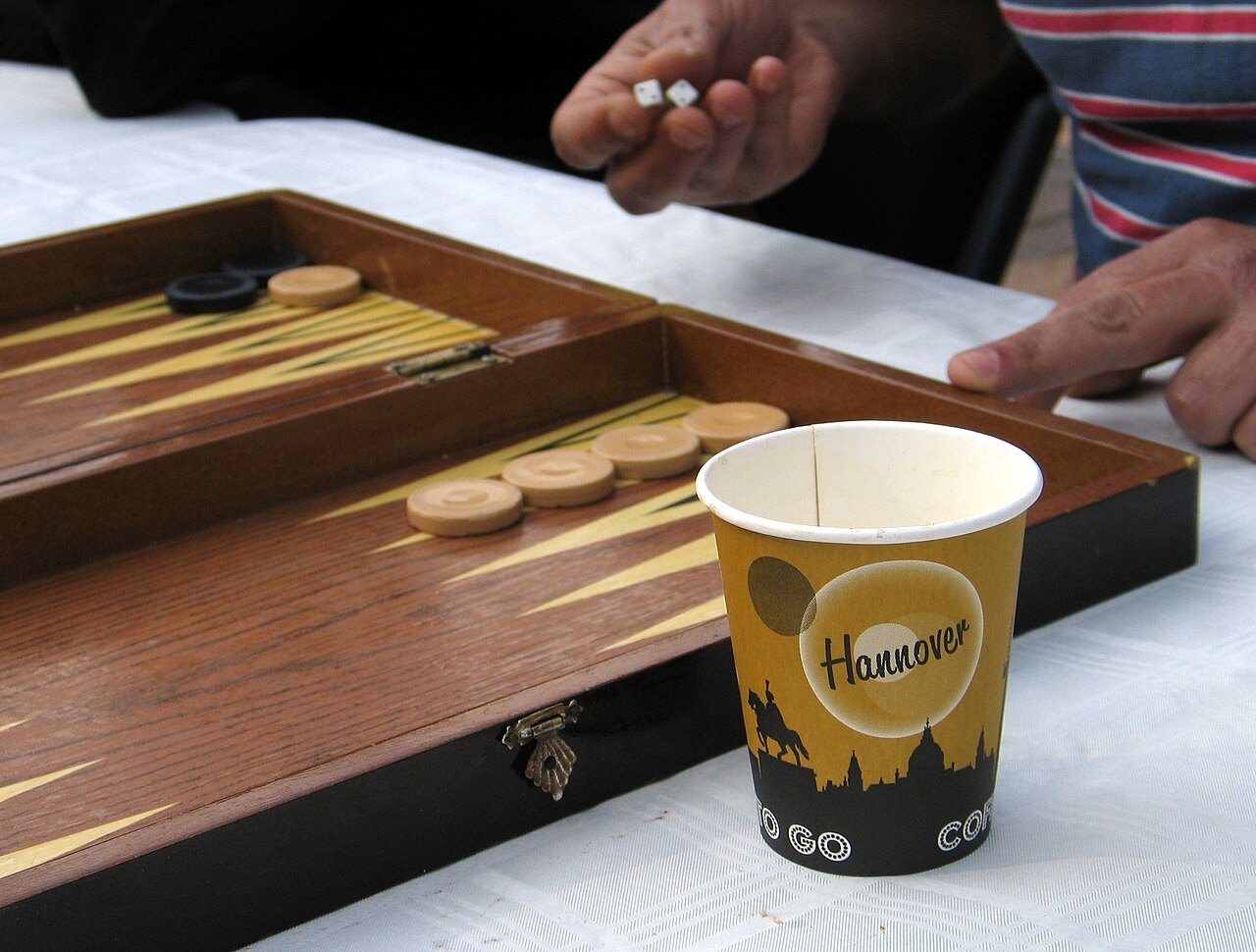

After a narrow defeat, it is tempting to say that everything came down to luck. After a win, the same game may suddenly seem to demonstrate excellent strategy. A more useful question is where chance entered the process and which decisions were possible before or afterwards. Dice and cards do not automatically oppose skill. What matters is how their results interact with the choices players make.
Before the choice or afterwards
Imagine two invented procedures. In the first, you roll a die and then select an action suited to the number shown. The result limits your options, but you can respond to it. In the second, you choose an action and then roll to discover whether it succeeds. You must assess an uncertain outcome before committing.
Both procedures involve chance, but they emphasise different abilities. The first rewards adaptation to a known situation; the second requires risk assessment. Many games combine both. A random starting hand may become known before planning begins, while a card drawn later can affect the outcome of a plan already underway.
Describe probabilities accurately
A fair six-sided die has three even and three odd results. The chance of an even number on one roll is therefore one half. After five odd results, an even number is not “due”, provided the rolls remain independent. The die does not keep an account of previous outcomes or compensate for a surprising sequence.
A deck behaves differently when drawn cards are not replaced. If a particular card is visibly absent, the composition of the remaining deck changes. Whether you are allowed to know that information is another question, determined by the rules. A visible discard pile and a concealed hand do not provide the same evidence.
A favourable probability also does not guarantee an individual result. A sensible risk can fail, and a lucky success does not make a poorly justified choice reliable. Assess the decision using the information available at the time rather than treating the last card as a verdict on everything that preceded it.
Consider what is at stake
Suppose two routes lead towards an objective. One offers modest but certain progress. The other offers a larger possible gain but could consume an important reserve. The appropriate choice depends on whether that reserve can be replaced and how much time remains. An identical probability can justify different choices early and late in a game.
A plan with several usable alternatives tolerates surprises better than a combination requiring one particular card. This does not mean avoiding every bold move. A player who is far behind may deliberately seek greater variation because a safe, small gain cannot change the outcome. The risk should serve an identifiable purpose.
Ask a more precise question afterwards
Discuss one situation: which alternatives were visible, which consequence was missed, and could different preparation have softened the random result? These questions teach more than classifying the entire game as luck or skill. Preference still matters when choosing what to play. Some groups enjoy dramatic reversals, while others want outcomes they can plan more closely. Neither preference requires pretending that all uncertainty can be eliminated.