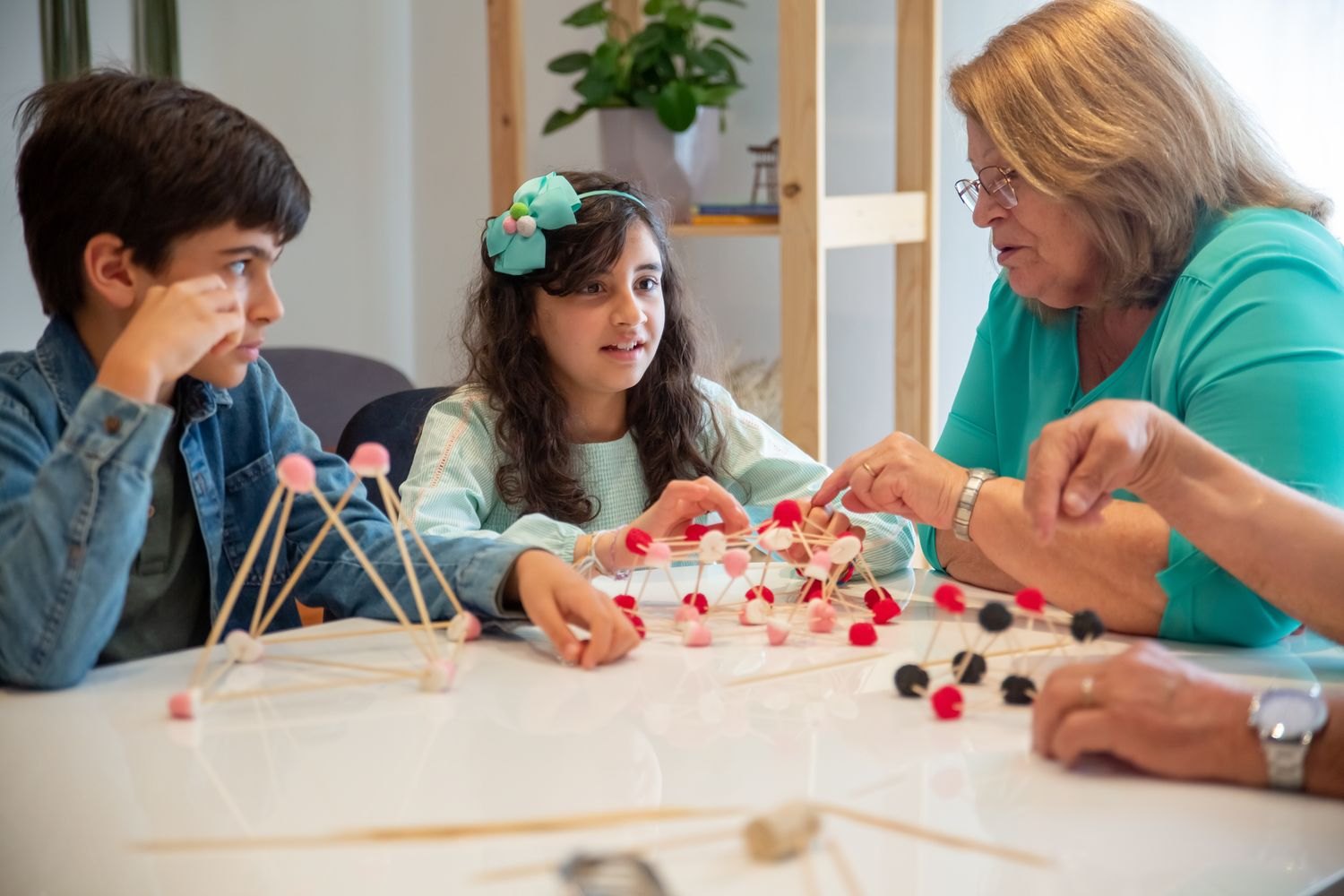
Across several generations, differences involve more than age and experience. Interests, reading pace, movement preferences and enthusiasm for competition can vary too. A suitable activity considers the actual people rather than automatically assigning abilities or preferences based on age.
Collect essential requirements
Ask about concrete conditions: must everything work while seated, should text be easy to read at a larger size, or does someone need more time to answer? These details translate directly into the plan. A broad request for an “age-appropriate” game is less precise.
Distinguish necessary adaptation from preference. Someone who dislikes trivia may need another role or format. Someone unable to read the text first needs an accessible presentation rather than simply easier questions.
Approach one shared task in different ways
On an imaginary map, some people can draw, others suggest place names and others describe a route. Everyone contributes to the same world without displaying the same skill. Roles should remain selectable and changeable.
Quiz teams can combine different experiences. Allow discussion and make sure one quick participant does not take every answer. A rotating spokesperson may help, provided it does not push anyone into an unwanted performance.
In a hunt, image clues can supplement text. Keep objects at reachable heights and clearly limit the search area. Difficulty should come from the puzzle rather than unnecessarily difficult routes or tiny printed notes.
Respond to feedback during the activity
A planned adaptation can still prove unsuitable. After a short trial, ask what should change. The whole activity may not need replacing; perhaps only the time limit or card readability needs adjustment.
Also notice who receives the interesting tasks. Permanently asking someone to hold materials is not automatically meaningful participation. Offer genuine choices and accept periods of watching. Shared time does not become equitable merely because everyone performs the same action continuously.
Try one concrete adaptation
Suppose some people cannot see small prints clearly in a picture activity. First enlarge the images or show them individually at a closer distance rather than immediately simplifying the content. If the task still does not work, add descriptions or change roles. Check each adjustment with the person concerned. A well-intended adaptation becomes useful only when it works in the actual session, and different people may need different changes to the same activity.