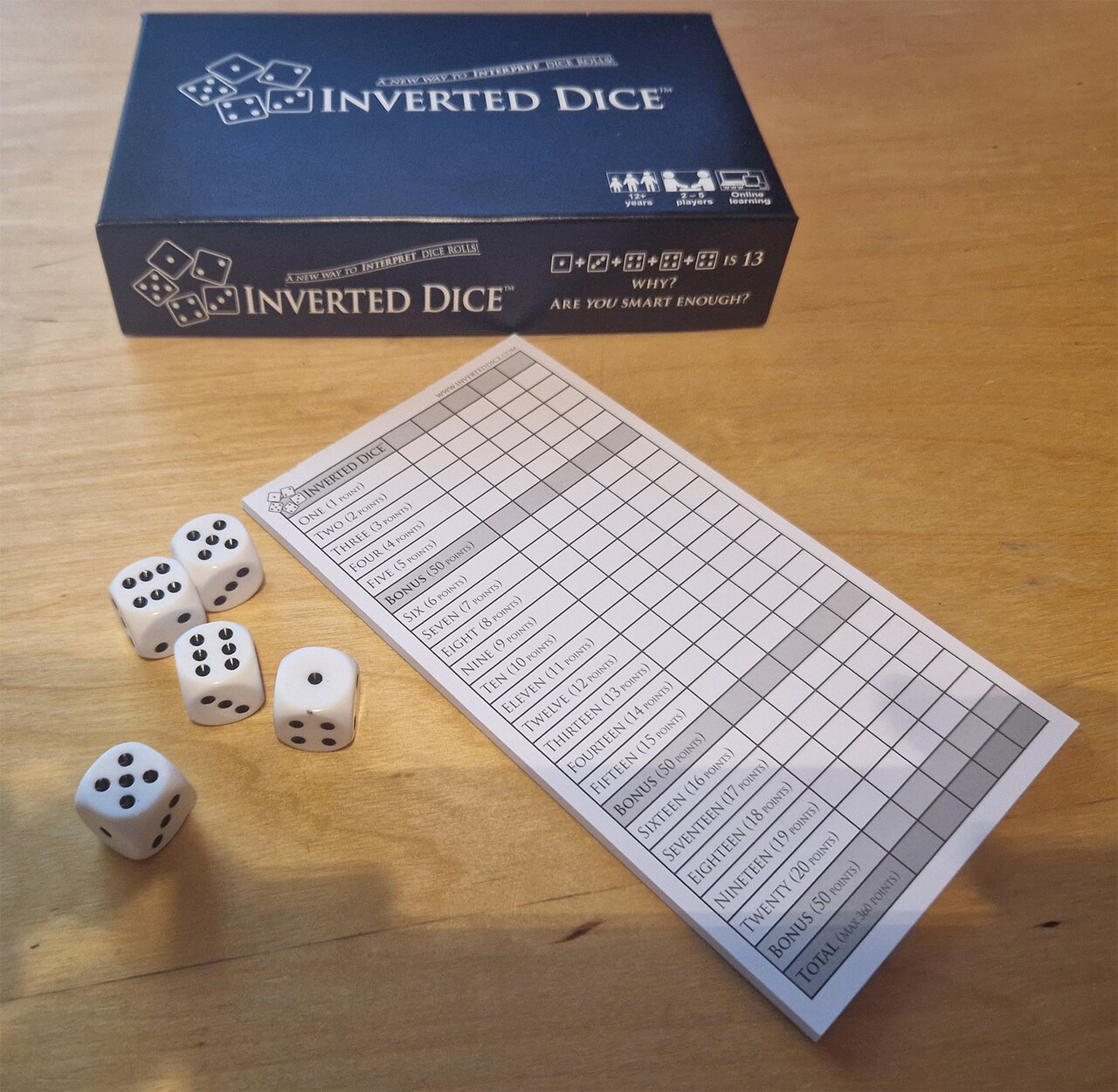
Dice land in the centre of the table, then players record numbers or marks on personal sheets. This process is commonly called roll-and-write. Related games sometimes use cards instead of dice. A short component list says little about the thinking involved: a single mark may complete a row, trigger a bonus and close off a later opportunity at the same time.
Explain the complete entry
During teaching, everyone should be able to see the same example sheet. Show which results may be selected, where an entry belongs and which spaces become unavailable afterwards. A pen mark is usually more permanent than moving a piece experimentally. Make the difference between considering an option and confirming an entry explicit.
An invented example requires numbers to rise from left to right. Entering a high number in the middle early may exclude smaller numbers on its right later. The immediate move is legal, but its future effect is restrictive. This relationship between a local choice and an expanding overall structure gives many such games their interest.
Organise simultaneous play clearly
When everyone uses the same dice, the next round should begin only after all choices are complete. A brief visible ready signal prevents a reroll while somebody still needs the previous result. It should clarify progress rather than become a way to pressure the final person into hurrying.
Check whether everybody really receives identical options. Some games give the active player an additional selection or allow others to use only particular remaining values. Explain those roles directly. Otherwise, newcomers may spend several rounds with an unnoticed advantage or restriction that changes how they understand the game.
Keep bonus chains traceable
A bonus may permit another entry that triggers yet another reward. Resolve these effects one at a time. If helpful, point to the triggering area before marking its consequence. Making several marks simultaneously makes a later mistake difficult to reconstruct because the link between cause and effect has disappeared.
Not every reward can be reused indefinitely. Read the precise order and any restrictions. If something remains unclear, pause before rolling again while the starting state can still be recovered. A short clarification now is easier than guessing which marks were legitimate after several further rounds.
Score together at the end
Score the first game slowly, using one example for each scoring method. Some sections add points, others multiply values or subtract penalties. A large number written in a space does not automatically produce an equally large contribution to the final score.
Keep the completed sheet if you want to review the game. It often records decisions more clearly than a remembered sequence of dice. Find one entry that later blocked several routes and consider which alternative was known at the time. This explains the development of your plan more usefully than a general claim that the dice were unhelpful.