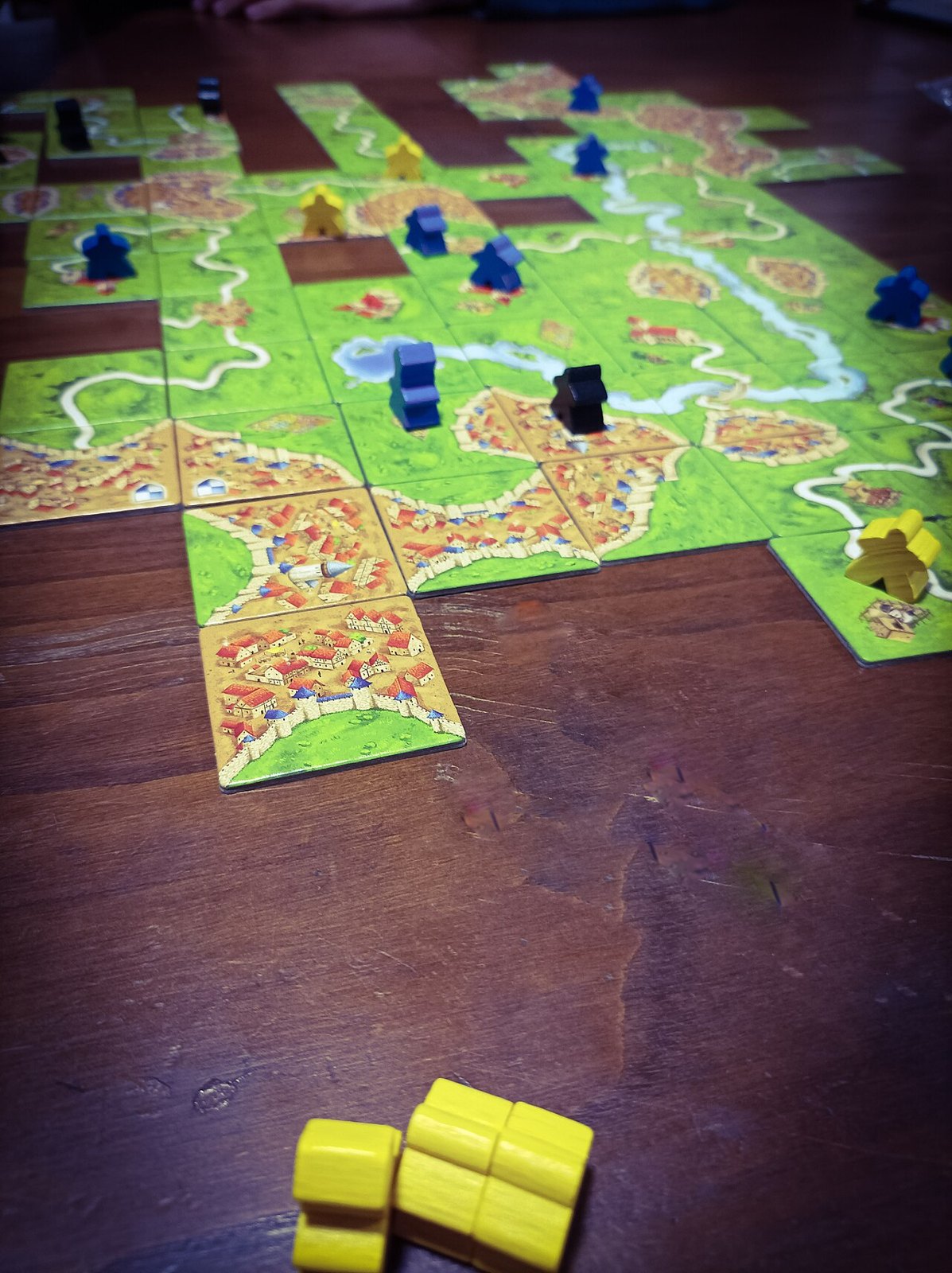

A landscape tile lies in front of you. Several locations accept it, but each changes the shared picture differently. Tile laying gradually creates a playing space from separate pieces. Some games require matching edges, while others specify particular neighbours or shapes. Before considering points, establish what makes a placement legal in the first place.
Separate legality from usefulness
Carcassonne joins landscape tiles into roads, cities and other features. The precise connection rule matters more than an impression that a piece “roughly fits”. Rotate the new tile mentally or physically and check every adjacent side. A useful connection on one edge cannot compensate for an illegal connection on another.
Only then consider the benefit. Does the position score immediately, extend your own project or create an opportunity for somebody else? In games that also allow a figure to be placed, the tile decision and the figure decision are distinct. Demonstrate those steps separately when teaching so their different restrictions remain clear.
Open edges have a future
A nearly completed feature may look tempting while leaving a gap with very particular requirements. Look beyond the points created now and ask which sort of tile would have to fit later. Without knowing the remaining tiles, you cannot calculate an exact probability, but an unusually restrictive combination is still recognisable.
A flexible open edge may leave more options than an elaborate project requiring one rare pattern to finish. This is not a universal strategy for every tile-laying game. It is a useful observation question: how much does this placement restrict the next one? The answer can change when an immediate reward is large or the game is nearly over.
Allow space for the growing layout
Position the starting area so the game can expand in several directions. If it reaches the edge of the table, agree whether the entire layout may be moved carefully. Quietly relocating individual pieces changes the game state and should not be treated as ordinary tidying.
If a rules question requires moving pieces, photograph their original arrangement first when useful. After the game, examine one particularly awkward gap and ask which earlier placement created it. This makes spatial planning concrete without requiring everyone to analyse the entire landscape from scratch before every turn. A specific example is easier to remember than a general instruction to “plan ahead”.