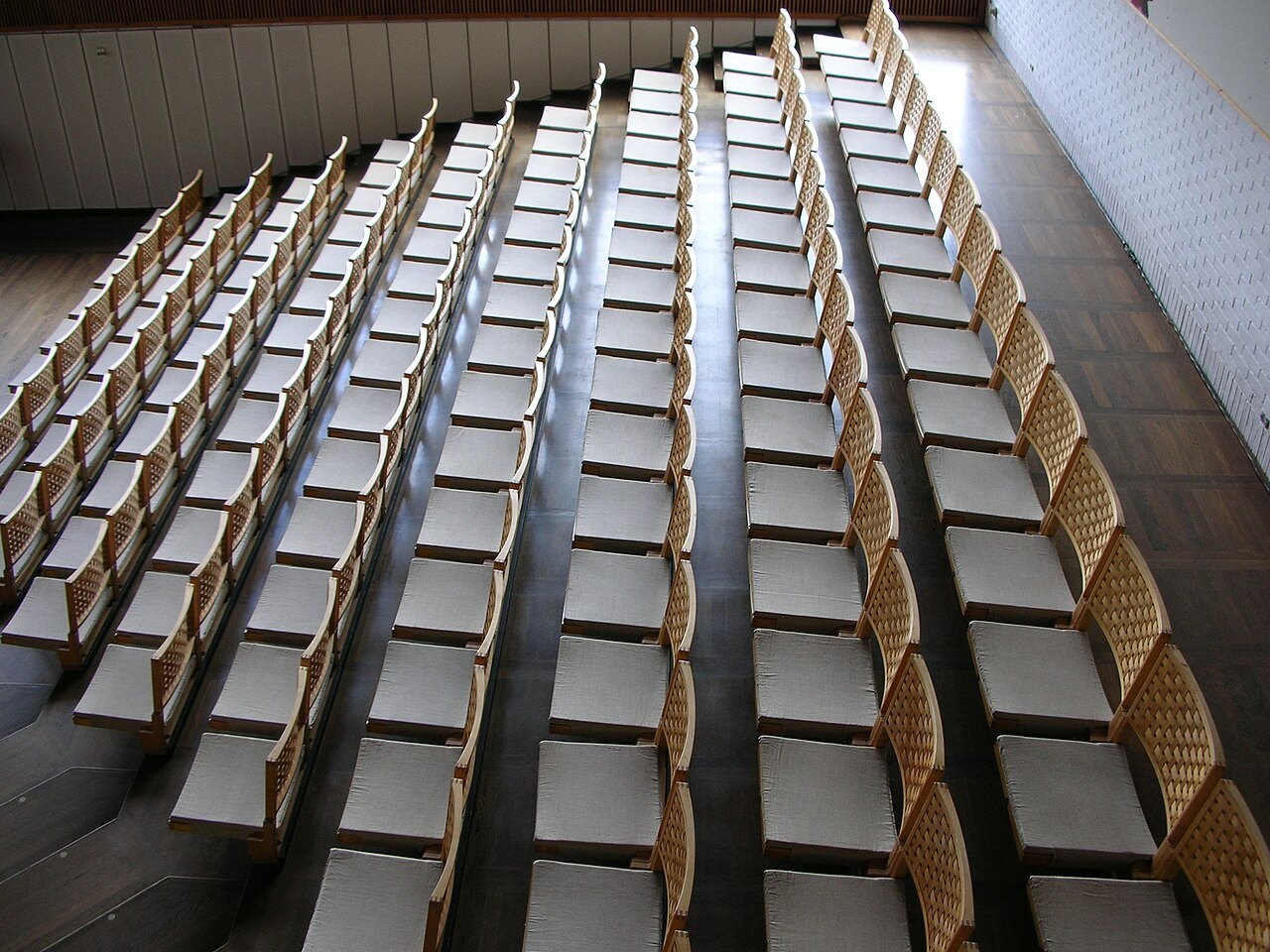

A concert hall offers more than a playback of familiar music. You can see how entries begin, how musicians respond to one another and how sound develops in the room. A simple outline of the programme helps with a first visit; specialist musical knowledge is not a prerequisite.
Read the programme as a sequence
Check which works or items are announced and whether there is an interval. One work may contain several movements without a public interval between them. The printed sequence helps distinguish these different kinds of break.
You need not listen to everything beforehand. If interested, choose one short excerpt and notice a recognisable instrumental colour. In the hall, that memory can provide orientation without turning the performance into a constant comparison with a recording.
Use sight to support listening
Follow one instrumental group for a while. Notice when it enters and when it remains silent, then return your attention to the overall sound. This reveals differences without requiring you to name every instrument.
Sometimes a musical idea moves between groups. You can follow it like a change of speaker in a conversation. The silence before an entry also contributes to the experience. Avoid treating every sound in the hall as a fault, however: a live setting includes the movements and responses of an audience.
From a side seat, you may see and hear different details than from the centre. Describe this as an impression of that position. It does not automatically support a judgement about the acoustics of the entire venue.
Leave room for unanswered questions
If unsure about applause, wait briefly and follow the progress of the performance. Conventions differ between concert settings. Venue guidance is more helpful than assuming one universal ritual.
Afterwards, note one moment that surprised you and one you would like to hear again. This creates a personal starting point for another concert. You do not need to choose a winner or write a professional review for the evening to mean something to you.