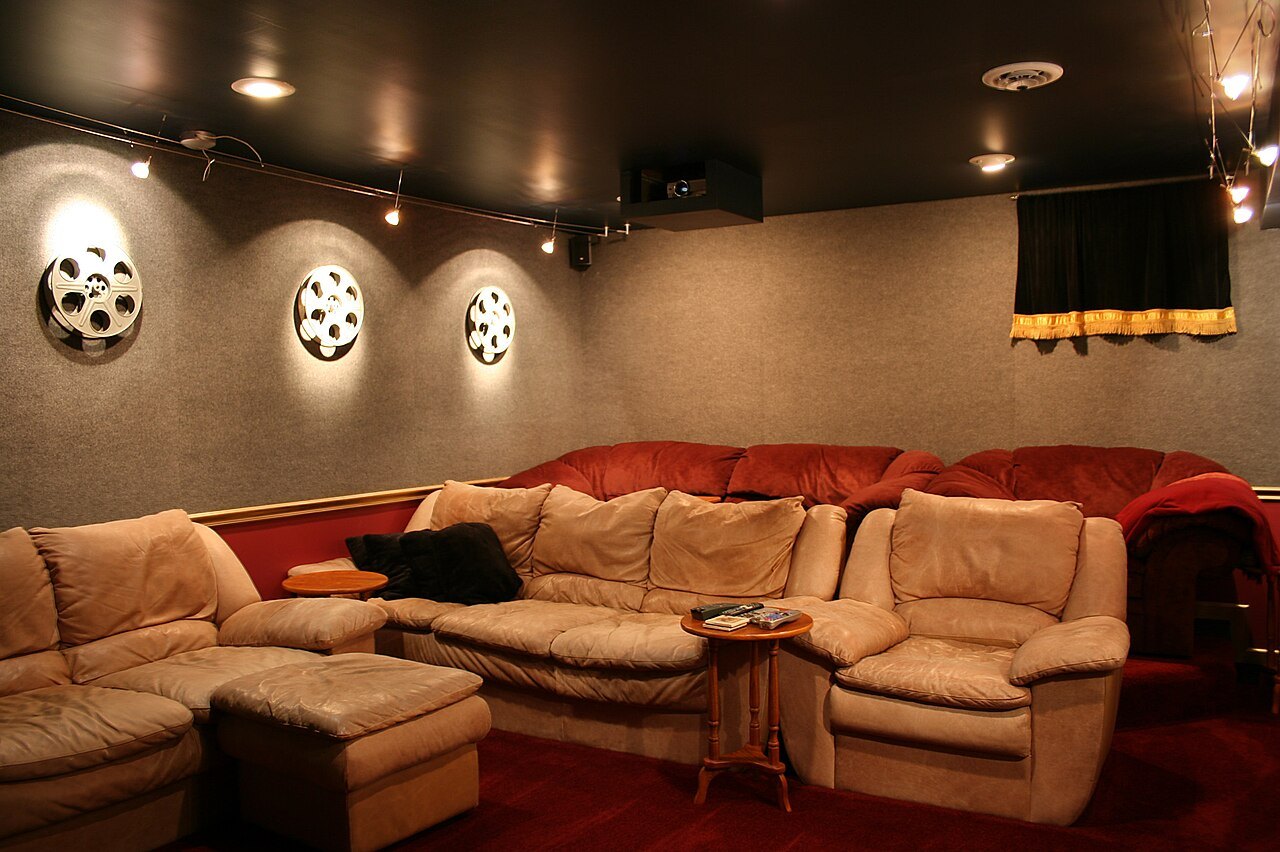
A projector does not suit a room merely because there is a large empty wall. Lens, image surface and seating need a workable arrangement. Daylight, cables, noise and the effort of rearranging the room also matter. Begin with these conditions before comparing individual products. A slightly smaller image that works comfortably may offer more in everyday use than the largest possible picture.
Establish the image area first
Temporarily mark the intended image width on the surface without damaging delicate finishes. Sit in the usual positions and look at the outline. Is there still room for speakers, doors or furniture? Will subtitles remain visible above people or objects? Check whether the surface is flat and reasonably neutral in colour too.
Diagonal size is not width. Planning with throw ratio requires the actual image width and chosen aspect ratio. Different film formats may produce black bars even when the setup is correct. Do not try to fill the same surface with every film by cropping or stretching it.
Work back from the image to the projector
Use the distance table or calculator for the exact model. The lens must occupy a position where image size and distance agree. Add cabinet depth, connector space and the ventilation required by the manual. A shelf in the right geometric position may still be too shallow for the equipment.
Consider whether people will regularly cross the light path. Temporary setups also need cable routes and a stable support. Ceiling installation requires appropriate fixings and the manufacturer's instructions. Digital keystone correction does not replace a fundamentally suitable position.
Assess the room at the time you will use it
Inspect the room under the light in which you normally intend to watch. Stray light on the image surface can lift dark areas and reduce perceived contrast. High light output does not automatically remove that problem. Decide whether curtains or another arrangement are workable, and listen for operating noise during a quiet scene at a demonstration.
Finish by recording three conditions: feasible image width, usable lens position and light control. If one remains unresolved, a trial arrangement or another measurement is useful before proceeding. The general question of buying a projector then becomes a concrete decision about this particular room.